
Is the turbulent nature of modern national and global politics a ‘turn-off’ for young people today? The academic and co-curricular engagement of Harrodian Sixth Form and Senior students, particularly in recent years, suggests that nothing could be further from the truth.
The surging number of Harrodian Sixth Formers opting to study Politics at A Level reflects a parallel national trend among British students. According to the Political Studies Association, A level Politics has seen a 12.4% increase in entries in the seven years up to 2025.
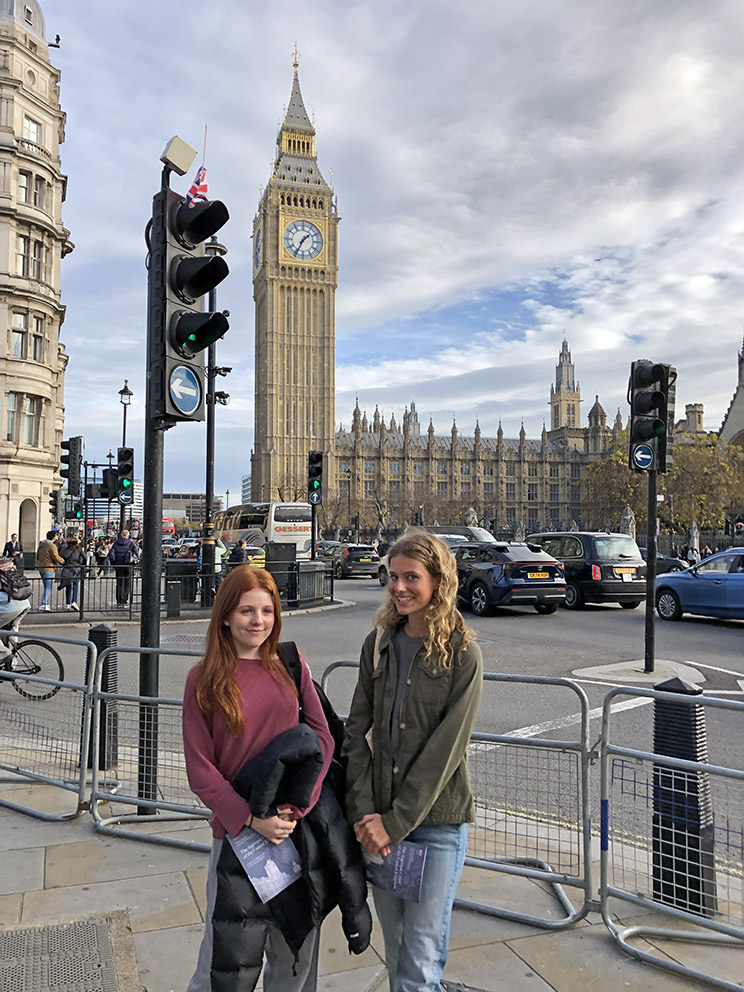
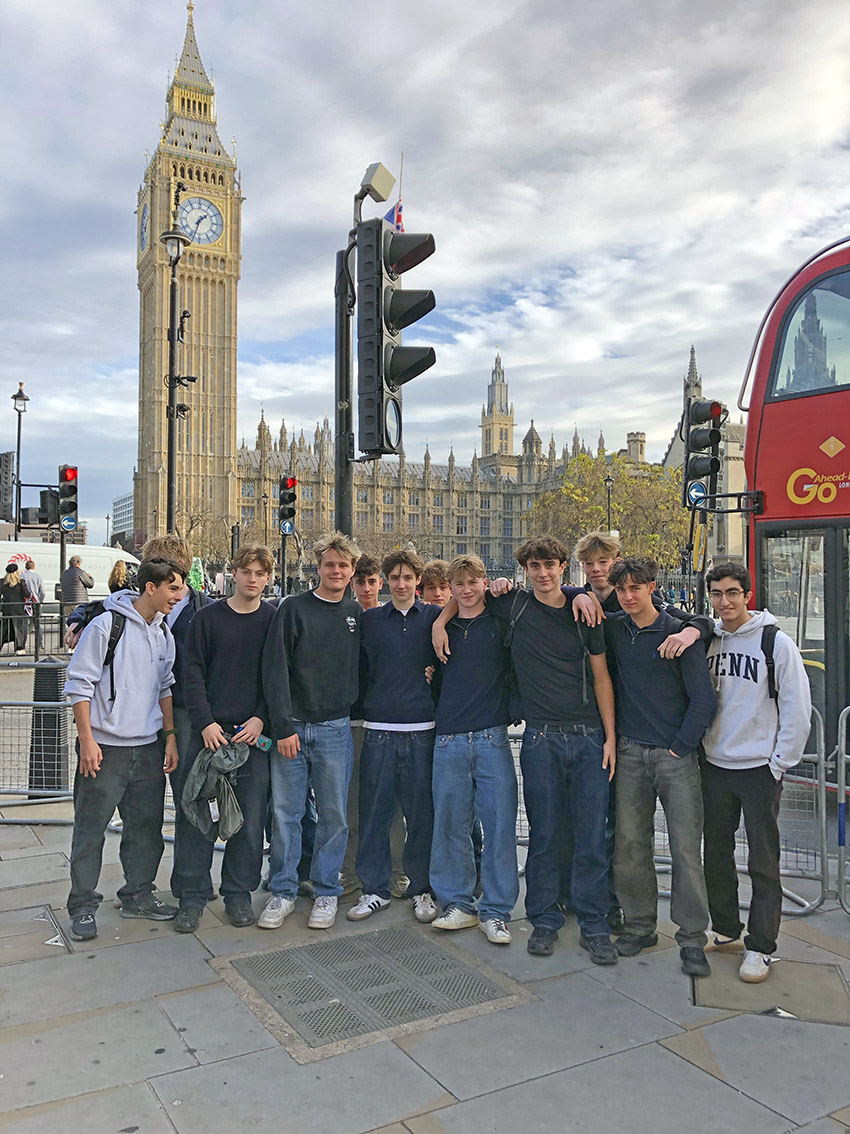
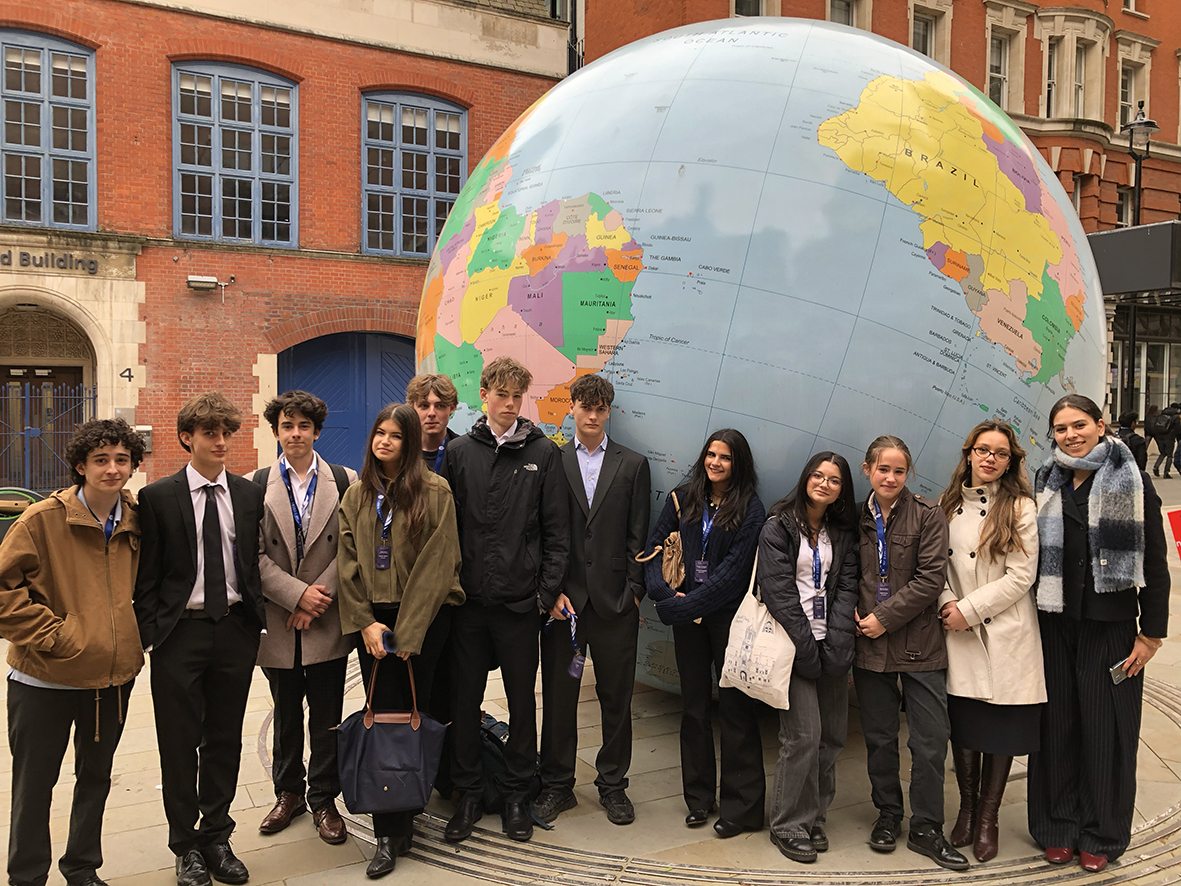
Above: Lower Sixth Formers studying Politics visited Parliament and the Supreme Court - a visit arranged with Richmond MP Sarah Olney's office on 4th November 2025
So, what is attracting Harrodians to sign up for the course taught by a team led by Head of Politics, Mrs Charlotte Arnold? Upper Sixth Former James believes that the impulse owes a good deal to a growth in political consciousness among young people fuelled by their exposure to political content of all kinds on platforms such as Spotify, Instagram and YouTube. ‘Podcasts make politics accessible, so they have opened up political discussion beyond traditional newspapers,’ he says, adding that Politics also has a welcome thrill of novelty. ‘Unlike History, the subject is only introduced at A Level, so it represents a leap into the unknown.’
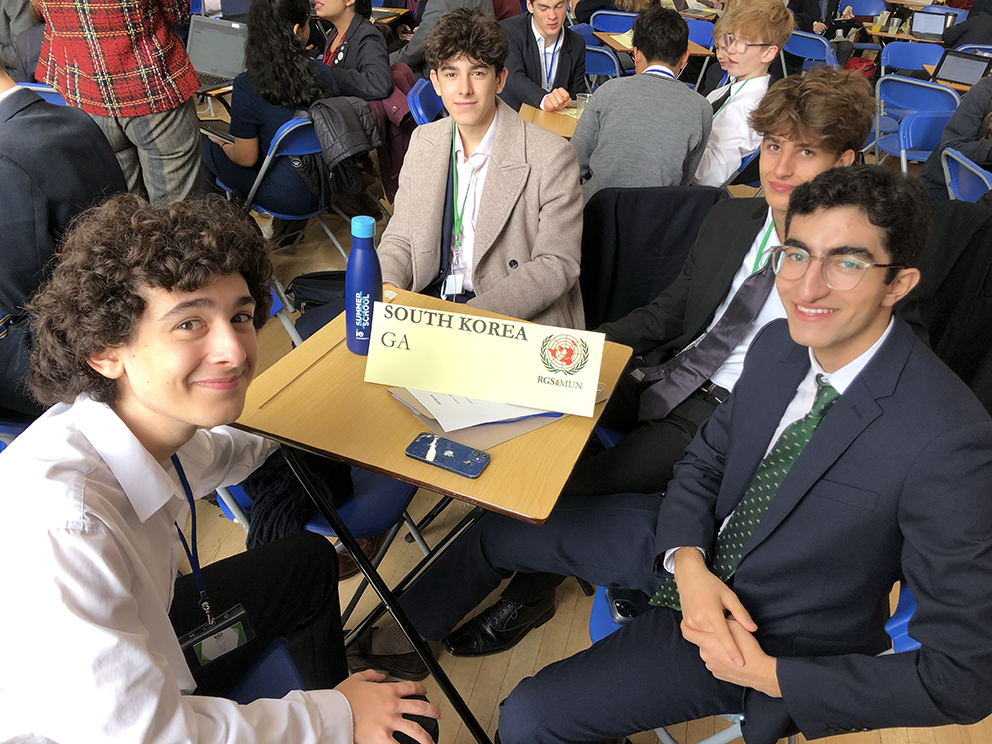
Lea (U6) praises the 'expansive' nature of the Politics A Level course and has particularly relished the interesting trips
So much for the leap but what about the landing? Politics at A Level is a demanding information and essay-focused course. Students are expected to quickly absorb new knowledge of UK and US systems of government and ideologies such as feminism and socialism, while staying bang up to date with current affairs. So, isn’t there a lot to learn in a short time? Sixth Formers like Lea (U6) seem to have taken the challenge in their stride. She praises the ‘expansive’ nature of the A Level course and has particularly relished the interesting trips Harrodian’s teaching team organise that reveal how the political institutions and concepts students learn about in the classroom translate into real life. Politics students have benefited this year from trips to the Houses of Parliament and the Supreme Court, Polecon and Question Time conferences, alongside talks at Harrodian by visiting speakers from different political backgrounds, including Liberal Democrat Richmond MP Susan Olney last year and, more recently, a Conservative candidate who volunteered her time as a parent.
This emerging interest isn’t confined either to the formal curriculum or to Sixth Formers. Alongside the surge in students opting for A Level Politics, has come a boom in sign-ups to our Model United Nations (MUN) club. Open to students from the 13s (Year 9), MUN is a lunchtime club that focuses on global issues and does not require a detailed grounding in UK politics. Instead, it offers a genuinely interdisciplinary experience, drawing on history, international relations, geography, economics, law and human rights, as well as environmental and social issues, often within the context of real world or historical scenarios. Talia (L6), a recent newcomer to MUN, illustrates this well: she has explored niche topics such as 'coercive loans in global finance,' linked to her A Level Economics, while also engaging with a broad range of ideas across different subjects.
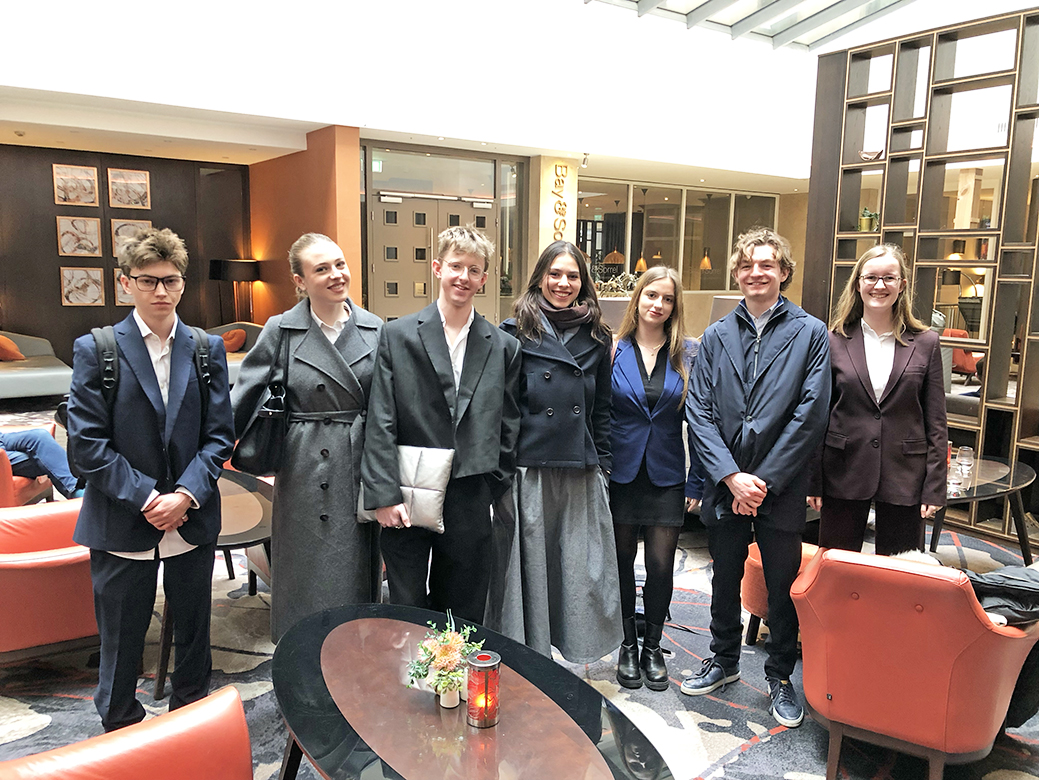
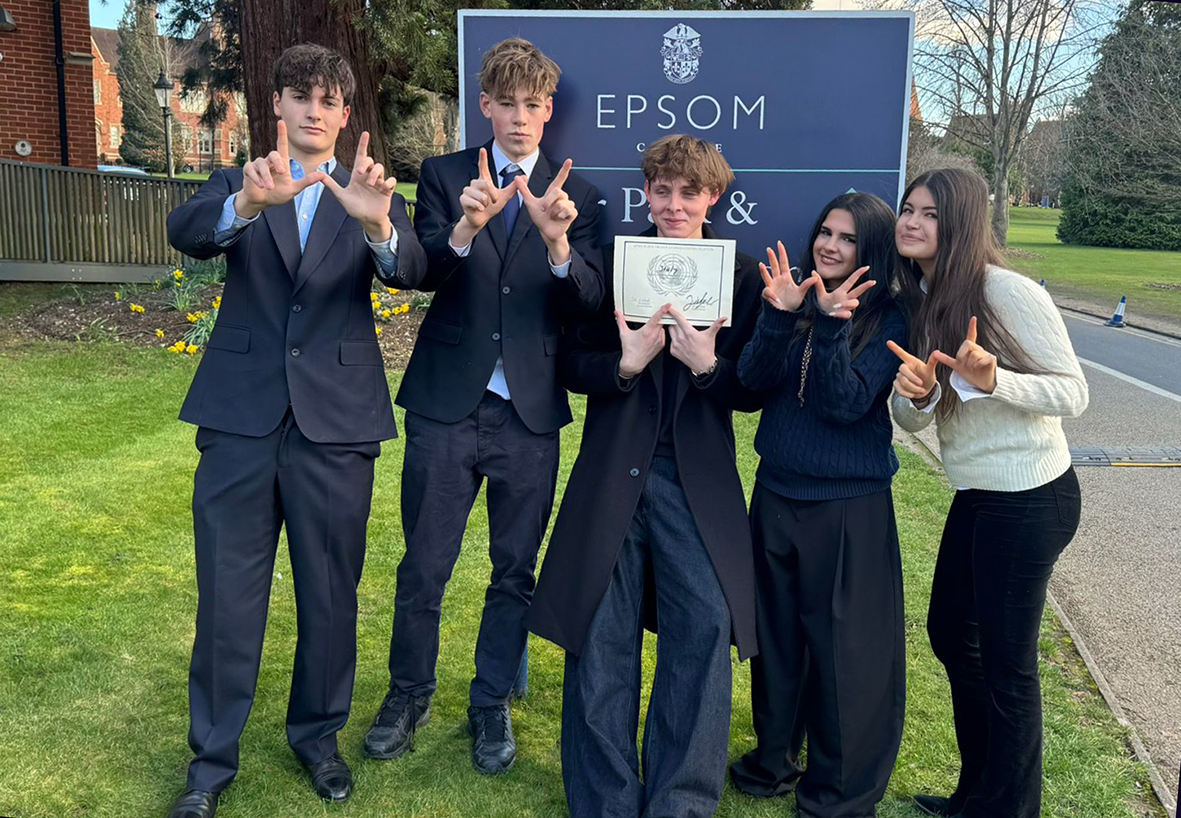
Club participants take part in MUN conferences which simulate the UN format. One day events this year have taken our team to Epsom College, RGS Guildford and The London Oratory School, as well as more demanding weekend university conferences such as LSE and LIMUN, where the level of debate is higher and the experience more intense. Across these events, students are asked to take on the role of delegates on behalf of a wide range of countries, from Sierra Leone and Italy to South Korea and Ecuador, debating in committees including Security Council, Human Rights, Economics and historical security and negotiation committees. In the process, they have also been recognised with awards, both as individual delegates and as part of group delegations.
Unlike History for example, Politics is only introduced at A Level, so it represents a leap into the unknown.
James (U6)
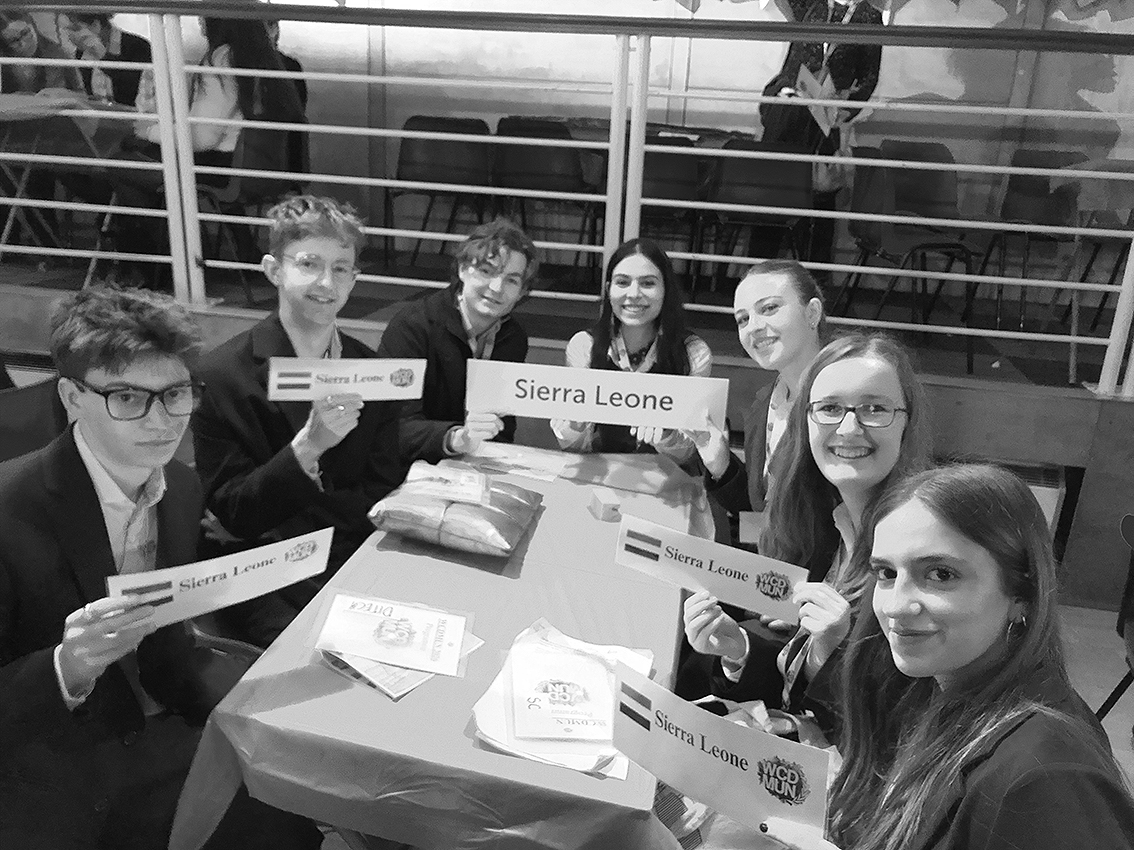
Role playing of this kind, whether it involves asking questions at a Politics Question Time conference or presenting an argument in a formal MUN committee, might seem intimidating. But for many Harrodians – including the A Level Politics students in the club - it is key to MUN’s appeal. Lea (U6) describes the public speaking element as 'terrifying but fun', while James (U6) points out that, unlike written A Level work, MUN requires delegates to defend arguments face to face and ‘make progress with your argument without it descending into Punch and Judy politics’.
For Athina (U6) much of the value of MUN lies in working to understand perspectives she may not agree with, having to think on her feet and developing key skills such as critical thinking and diplomacy.
Athina (U6), who has been involved in MUN since the 13s (Year 9), is a clear example of students embracing the opportunity to hone their public speaking skills. She highlights the 'challenge of representing views that are not always your own', recalling how she took on the role of Nigel Farage at one of the conferences, despite initially feeling unsure about how well she would deliver. For her, this is where much of the value of MUN lies: working to understand perspectives she may not agree with, having to think on her feet and developing key skills such as critical thinking and diplomacy. More significantly, she credits her involvement in both Politics and MUN with helping her to map out her future pathway, with plans to study International Relations at university and, in time, pursue a career with NATO.
For the moment, conference trips - most of them scheduled at weekends - are largely organised by Mrs Charlotte Arnold and a regular band of supportive teachers. But as their hunger to participate and to compete continues to grow, some of our senior students are beginning to take on organisational roles themselves. The recent weekend trip to WCMUN at Wesley College, Dublin, for example, was student-led and planned with their input, and more generally Sixth Form Politics students seem to share the view that 'the best way to learn is to throw yourself into the many opportunities the Politics department offers', while also taking the initiative to organise events themselves. Harrodians’ passion for politics, in and beyond the classroom, is clearly continuing to gather momentum.