




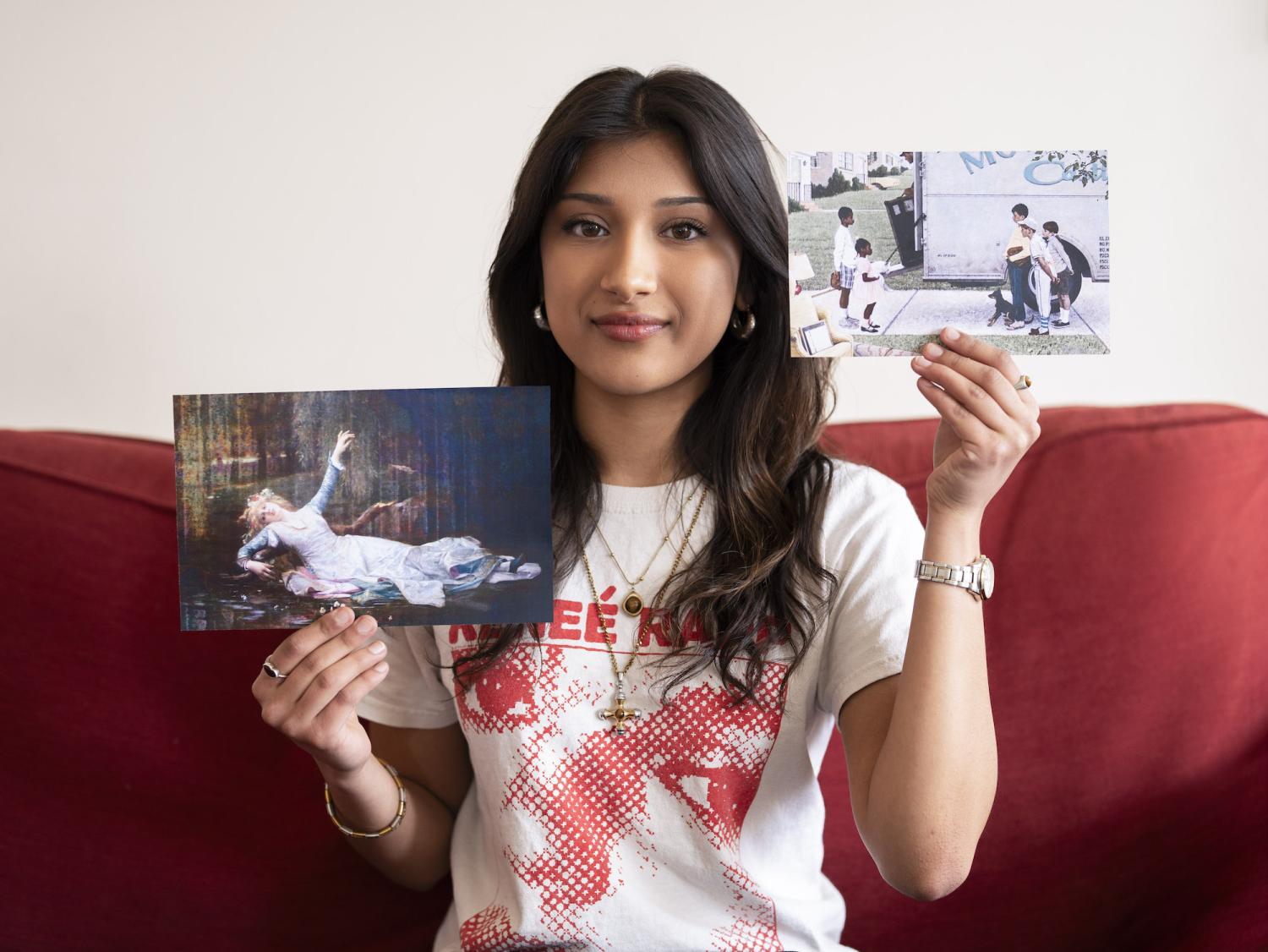
Lower Sixth Former, Sasha has just scooped a runners- up prize of £1350 in Art History Abroad’s prestigious Sir Trenchard Cox Scholarship for budding Art Historians.
The competition asks 17-18 year olds to write one 400 word piece about an artefact – including music, design or art – that they love, and an article of the same length on a piece that they loathe.
Sasha, who plans to study Art History at university and describes herself as ‘a proud granddaughter of Anti-Apartheid activists’, chose Norman Rockwell’s thought-provoking, ‘super-real’ 1967 painting New Kids in the Neighbourhood as a favourite because its atmospheric sense of ‘blossoming affinity ….captures the innocence of children exploring the unknown in a racially divided America’ and ‘fills me with peace and possibility’.
Her object of disgust is Ophelia, an 1883 portrait by Alexandre Cabanel which she lambasts as a ‘lustful misrepresentation… an artwork that would rile the mind of any feminist’. For Sasha, Cabanel’s eroticised ‘sensual and provocative’ portrayal of Shakespeare’s tragic heroine is‘ridiculous’. ‘The painting fails to convey the powerful story of Ophelia and instead paints over her pain… . I know she would have despised this painting just as I do.’
You can read the full text of Sasha’s powerfully argued entries below.
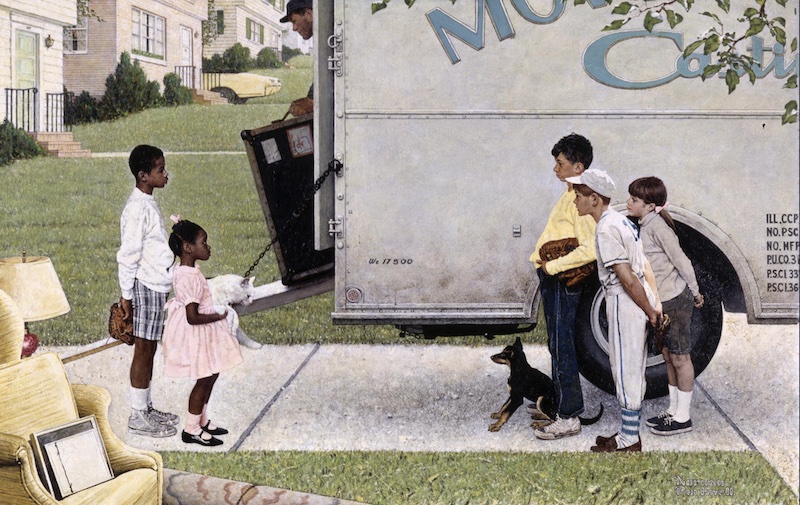
New Kids in the Neighbourhood by Norman Rockwell (1967)
This painting fills me with peace and possibility. I feel like I'm standing right there with them - nothing is decided; the future is infinite and hopeful. It's the opening line of a story which we have the power to finish. This is the purest expression of human interaction, brilliantly capturing the innocence of children exploring the unknown in a racially divided America; yet I don't feel as if I'm waiting, with a grimace on my face, for an imminent outburst of hate or aggression.
The first time a man leant out his window and spat at me, I realised how sad unconditional hate can be. No one is born a racist, only bred to be one. Child-like curiosity is a precious thing, and deserves to be nurtured through conversation and experience, not poisoned by corrupting a young mind with bigotry. Unsupervised and free from the pejorative, watchful eyes of their parents, these children are in control of a world of their own - a silent moment where the intent gaze shared between them is loud enough to fill the entire canvas. This moment is special to me as it sparks memories of first days of school, anxious breaths, and trying to understand each other without saying a word.
Rockwell paints the picture of blossoming affinity; oneness is within reach for them to discover.I become immersed in the warm, softness of this unextraordinary suburban scene. It's the small detail that tie these figures together: the baseball gloves, held at the ready, in the hands of both the boys; the pink bows which lace the hair of the two girls; and even the animals, contrasted yet similar, bothobviously intrigued by each other. The echoed yellow tones of objects throughout the painting frame the two black children, suggesting harmony is promising.
As a proud granddaughter of Anti-Apartheid activists, who were imprisoned and exiled for their convictions that people of different colours should live together, this sense of hope is strong in my blood.
Rockwell’s painting fills me with joy as he reminds me that outcomes aren't predetermined. It allows me to dare to dream that Martin Luther King's vision of black and white children holding hands is not a dream, but will take those not yet corrupted by prejudice to make it a reality.
.jpeg)
Ophelia by Alexandre Cabanel (1883)
This painting disgusts me; as a girl who has grown up watching brilliant women tear down the patriarchal barriers of our world, this is a painfully obvious example of an artwork which would rile the mind of any feminist. The 21st century - home to the manosphere, is polluted with sexism and hostile attitudes towards women, yet the origins of these views are scattered through history, both subtly and aggressively, presenting almost every art form we consume. Many assume, since the suffragettes and the civil rights movement,progression has been undeniable - yet ignorance and internalized misogyny is still as prevalent as ever.
Whilst discussing the eroticisation of Ophelia’s misfortune and weakness with a male friend, his off-hand remark of ‘It's not that big a deal, at least he made her pretty’ said it all.
The artist shows absolutely no sense of depth or understanding for the scene at hand and instead decides to parade his skills around the canvas in the form of delicate foliage and soft skin. To picture the supercilious elites who would indulge in this ridiculous presentation of Ophelia infuriates me because it sexualises the innocence of every woman’s body, but also for the forgotten turmoil and grief of Shakespeare’s writing - lost in Cabanel’s lustful misrepresentation. I know Ophelia would’ve despised this painting just as I do.
I loathe the way Cabanel uses his paintbrush to illusionistically distract us from her torture with intricate patterns and shimmering water; he steals her innocent womanhood and twists her in oil paints, until sensual and provocative, hiding under a masterful guise of literary reverence. Her neck is thrown back dramatically to reveal the glowing elegance of her bare skin, leading the eye across her accentuated breasts and hips. The fractured branch which she rests upon is a hopeless attempt to insinuate any kind of shock or danger, which is immediately nullified by her overwhelming repose. This painting fails to convey the powerful story of Ophelia and instead paints over her pain with complimentary colours – I simply can't stand it