



 With its complex and convoluted plot and its hugely demanding sung-through score, Les Miserables is not a musical drama production to be trifled with. But Harrodian's Drama and Music rose magnificently to their epic challenge, writes English Teacher Digby Don.
Photographs by Yana Kozar
I’m almost lost for words!
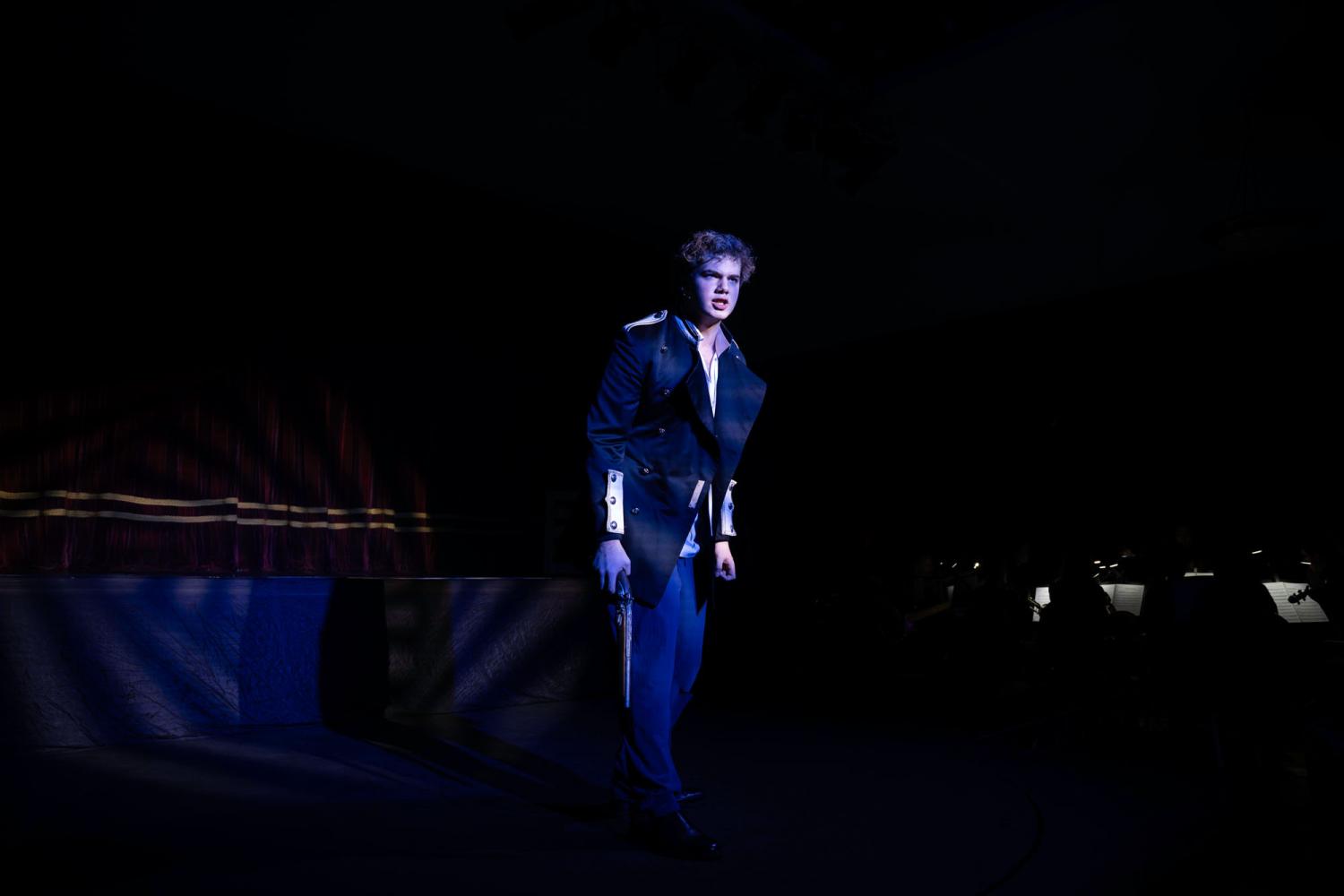
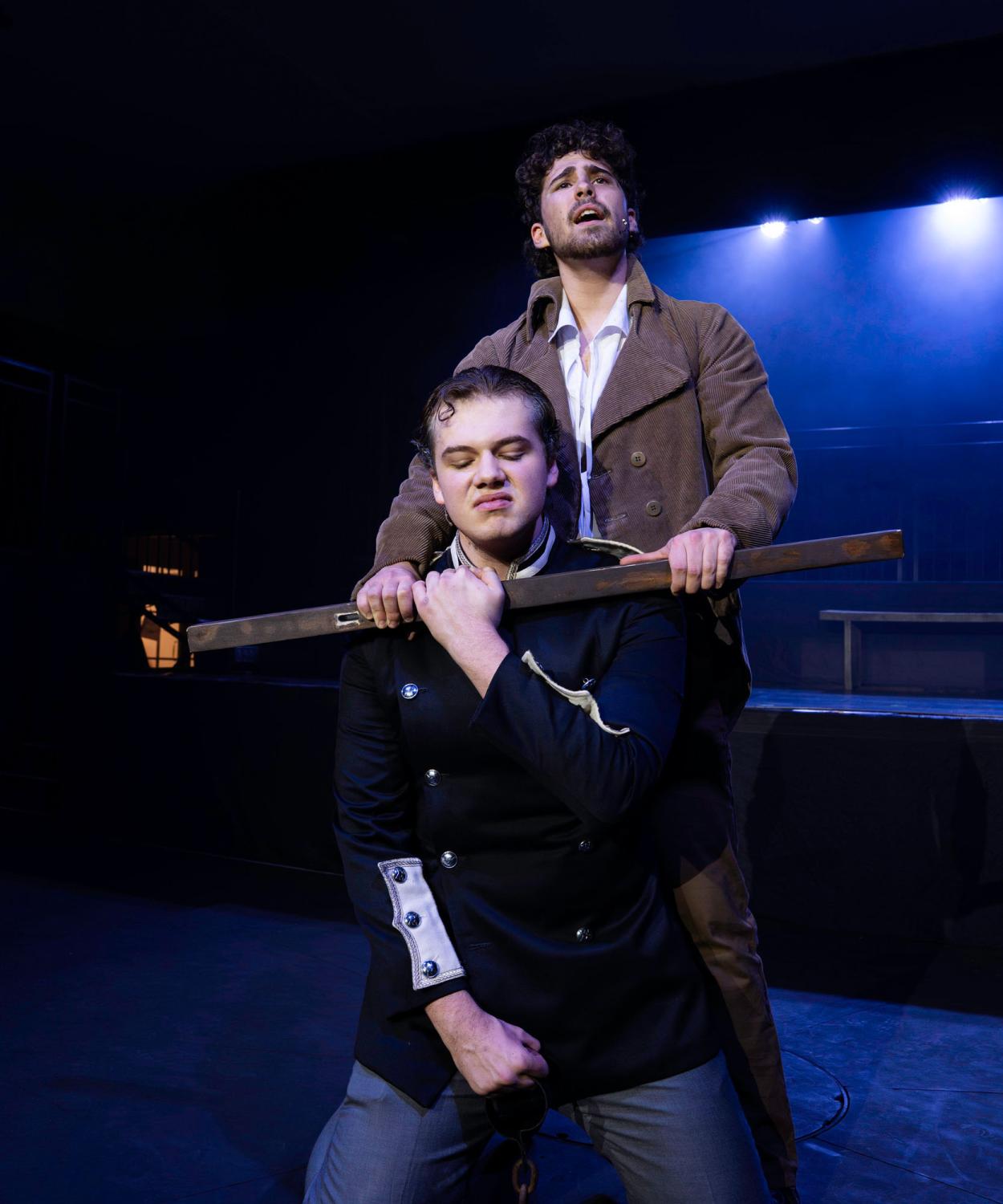
Which moment got you? For me, it was the scene in Act Two when Woody’s Valjean bid farewell to Jamie’s Javert: ‘No doubt our paths will cross again. Go.’ This was their last performance together on the Harrodian stage. A moment ago it seems, they were boys, getting to grips with roles in Legally Blonde and Macbeth, asking for extensions to English homeworks. Not only was this a coming of age for the two leads who represent the moral and emotional core of this production, it also marked a new high collaborative high point for Director Mike Glen, Musical Director Kay Le Doujet and the combined forces of the Drama and Music departments after nine months of hard graft. To paraphrase Mr Glen, Les Misérables can be done, but only with the right cast, the right musicians and the right crew.
As we watched the curtain call - the smiles, the hugs, the waves - it was clear how much the cast had grown to love one another. They were rightly proud of their achievement. I wondered about the hours of practice and about how many conversations had taken place between cast members, ranging from U6 to the 11s. I was reminded of a cold afternoon in November when I poked my head in to catch part of a rehearsal and reflected that a number of these pupils had already been in three or four school productions. They now had the experience and skill to be cast into the roles of this demanding sung-through musical.
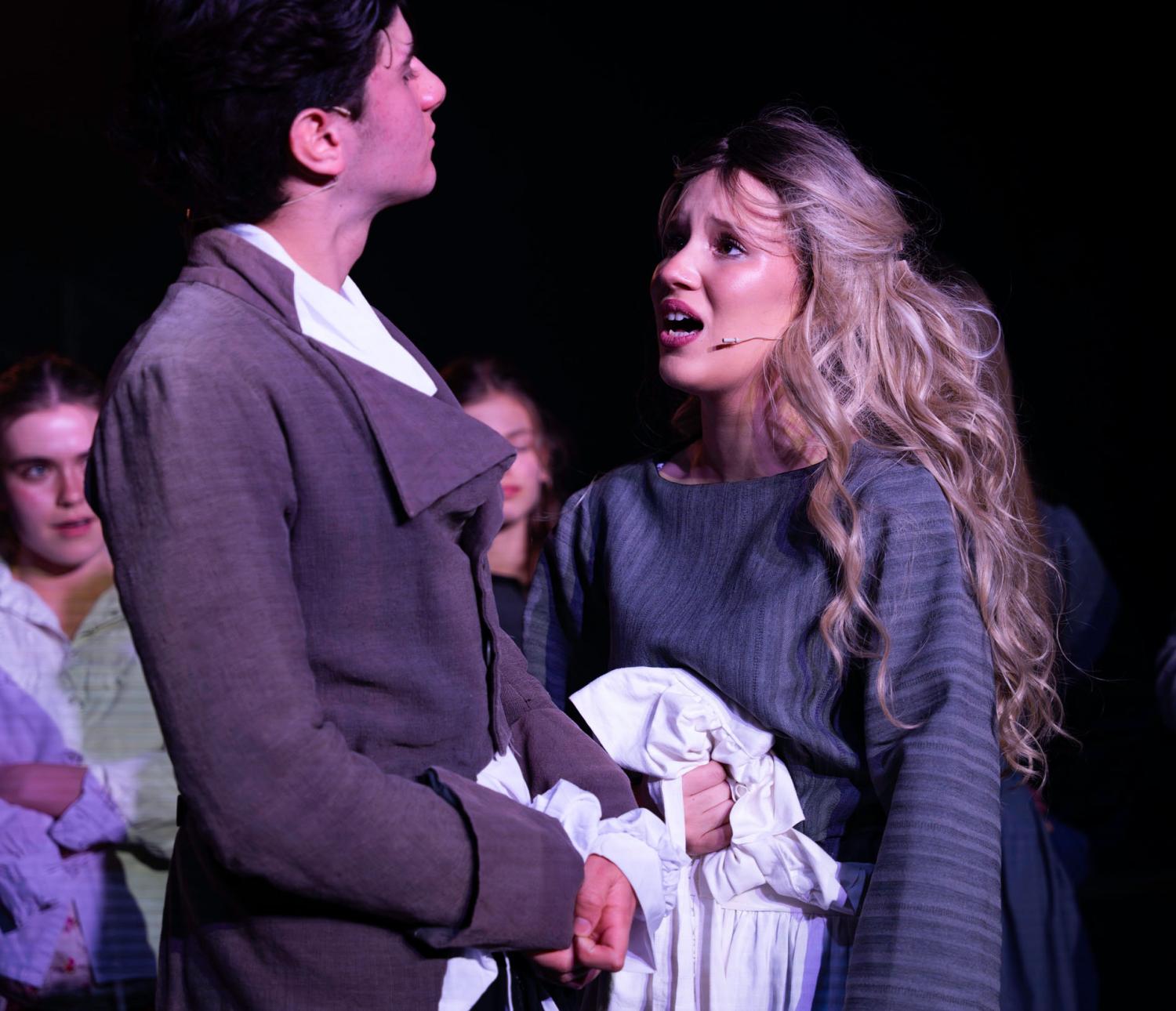
See more production pictures in our Les Miserables photo gallery
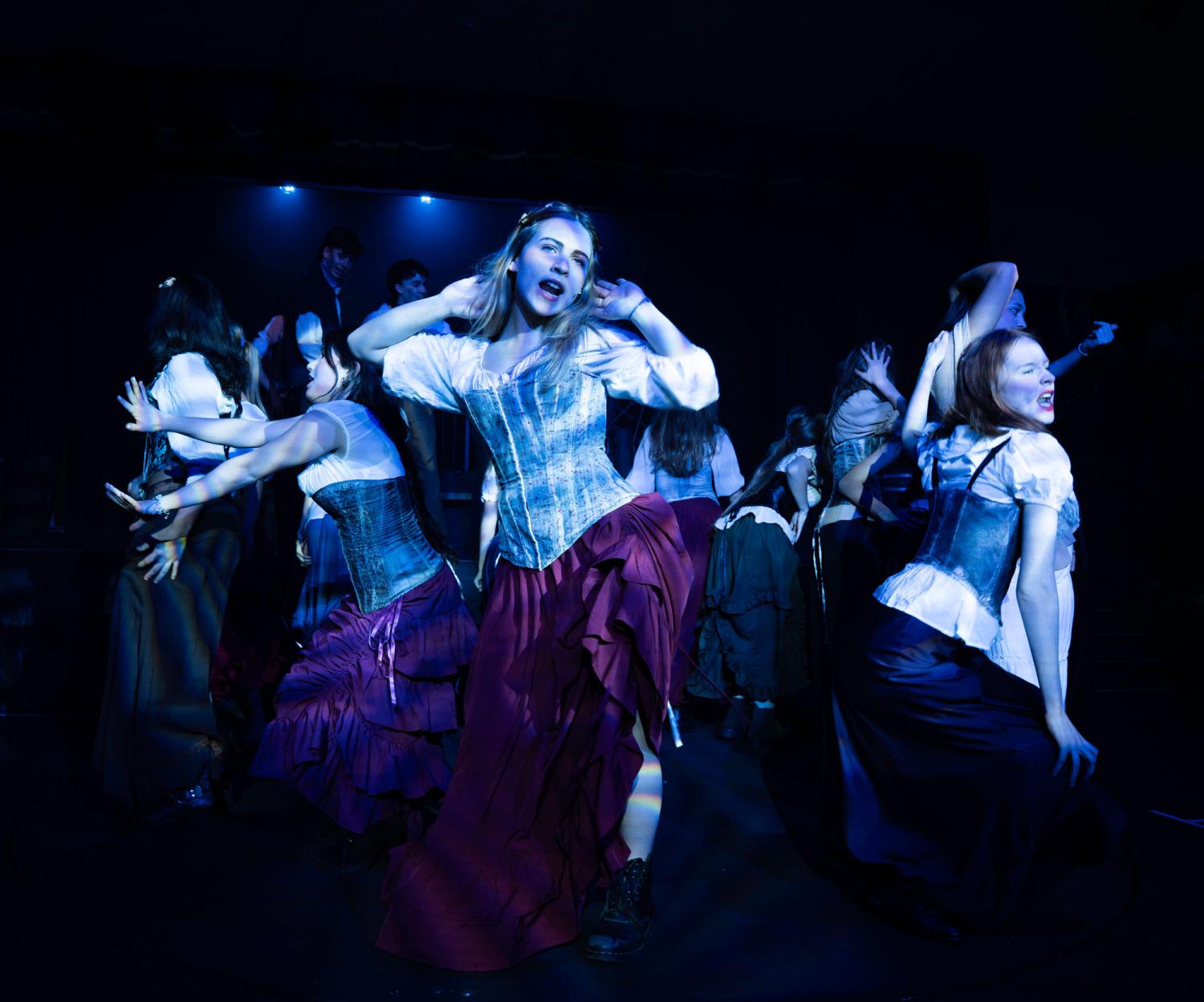
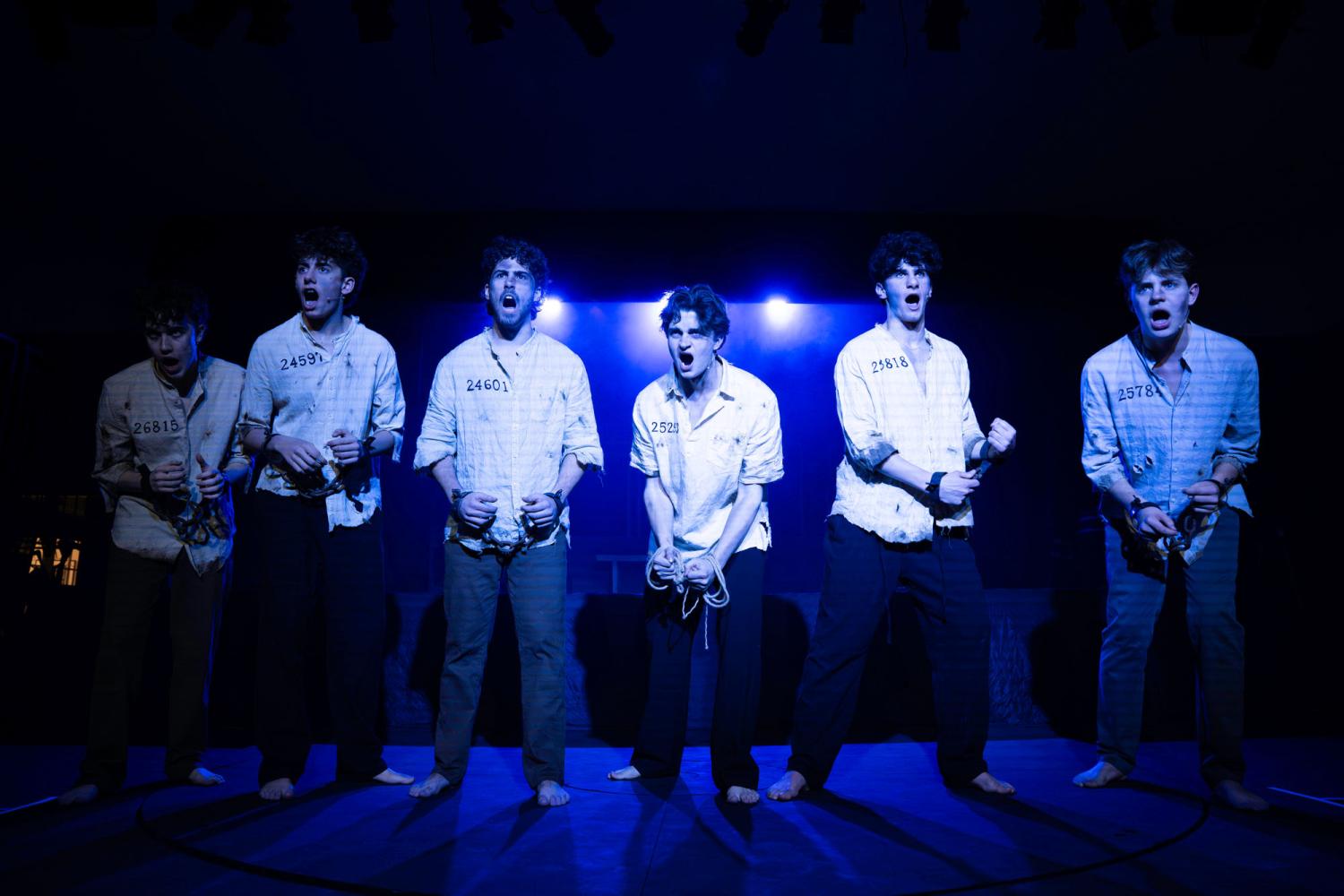
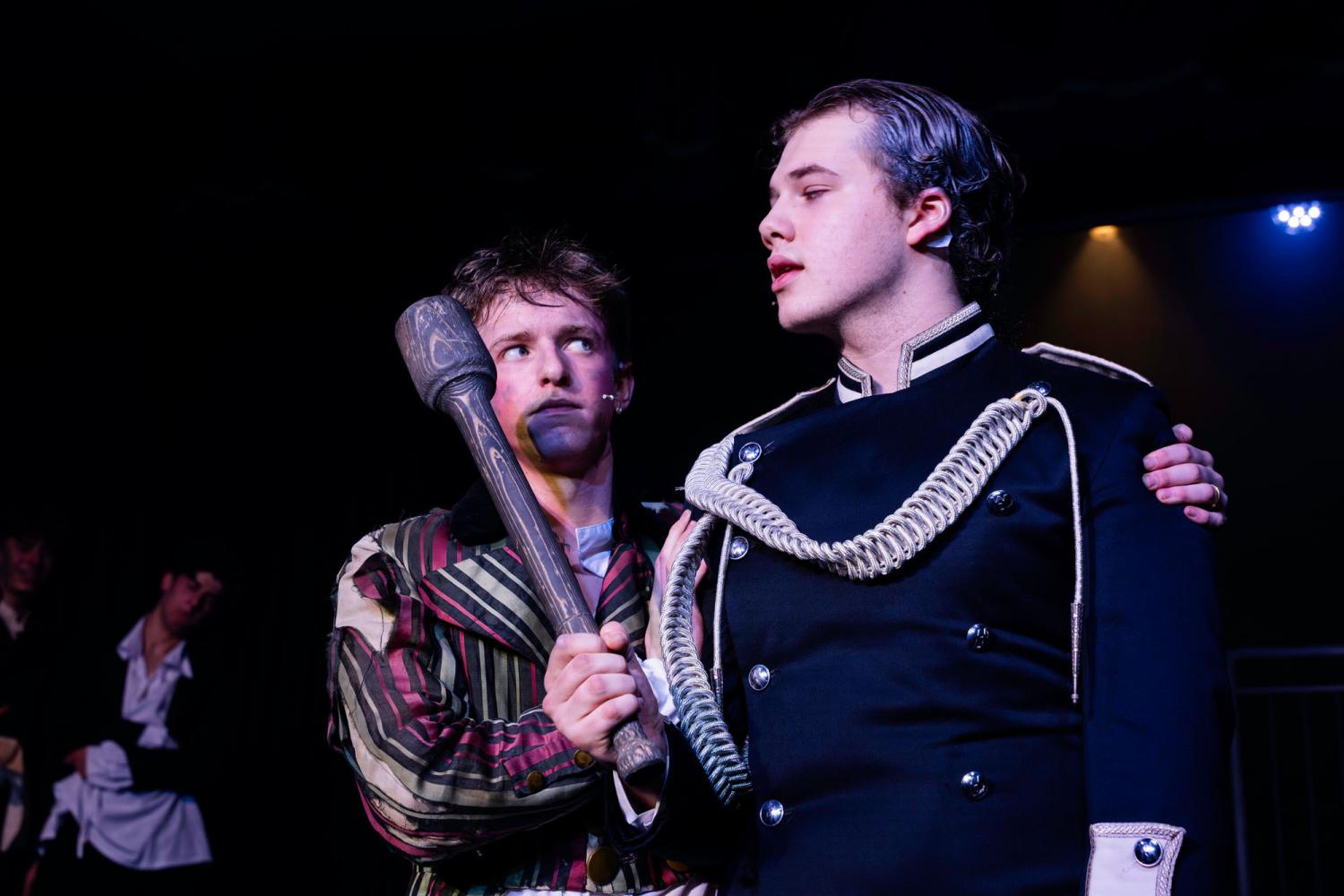
So, to 7pm on Wednesday 11th February. With the opening scene, the stakes were high. The chain gang needed to be in perfect rhythm and the song ‘Look Down’ needed to be in time. The actors captured the brutality of being forced into captivity and labour better than I could have imagined. Without excessive props or chains the group on stage instilled dread and fear into the room: ‘You’re here until you die […] They’ve all forgotten you’. The stage used multiple levels and, sure enough, Javert entered from above, brandishing a jaw-crushing truncheon. His clipped speech, rolled Rs, and prim appearance only added to his indifference to the suffering of the souls below; the cruelty of his dogmatic world view was clear for all to see.
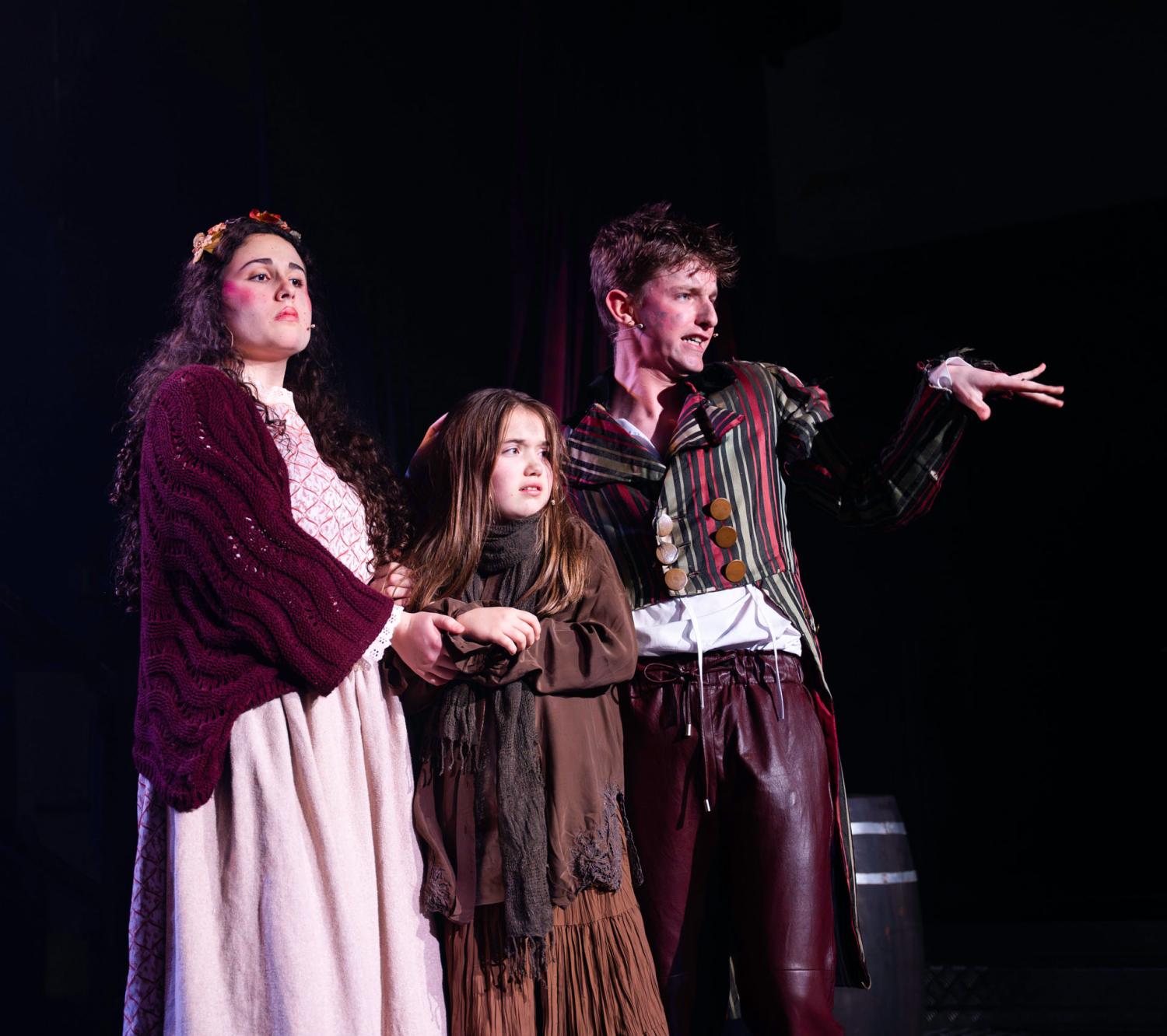
Les Misérables marked a new high collaborative high point for Director Mike Glen, Musical Director Kay Le Doujet and the combined forces of the Drama and Music departments
Digby Don, English Teacher
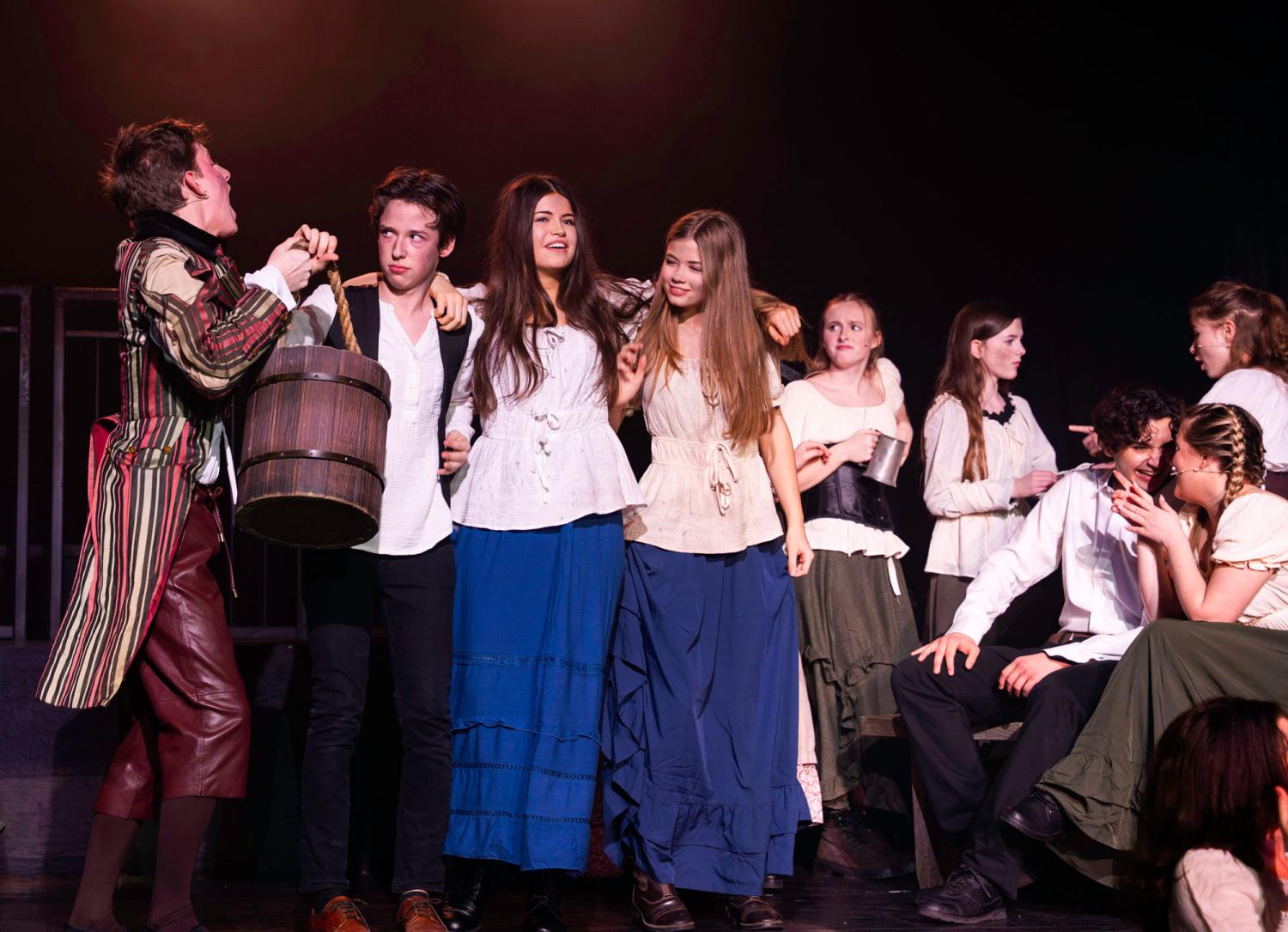
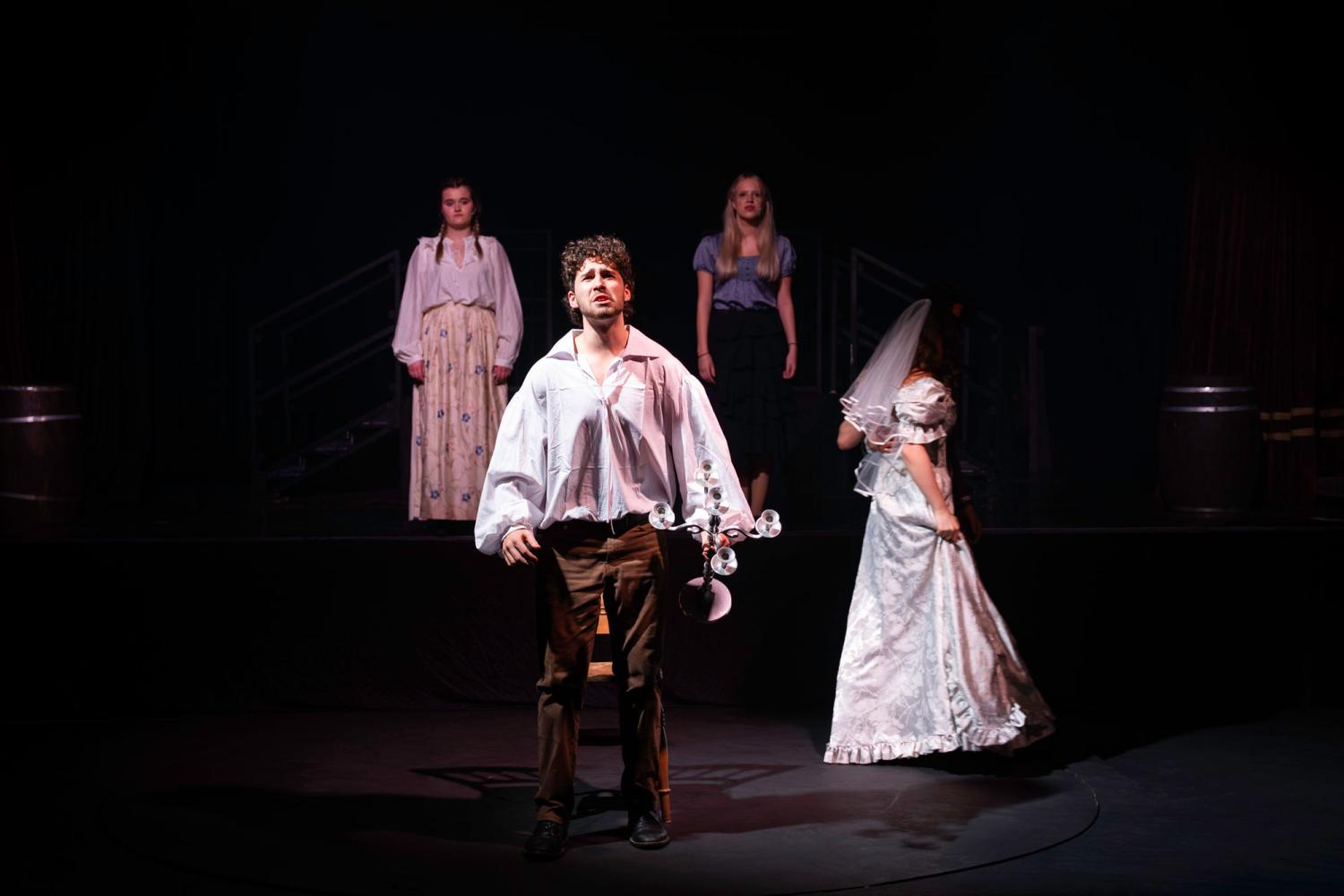
It is hard to overstate just how good this production was; melodrama is a risk with Les Mis, threatening to sabotage those moments when the acting is not strong enough. But the acting here was mature enough to negate this danger. Valjean’s anger and pain at being forced into captivity and put on parole was written on Woody’s face. His decision to steal the silver felt entirely believable. His shot at redemption when the priest (played by Fin) took pity on him was made doubly powerful. I loved the live music and being able to see Ms Le Doujet, the conductor at work, as the musicians worked in sync with the pupils on stage. Actors showed a close awareness of each musical theme, as it was introduced, and not a number went by without the audience listening intently.
Watch our film of Les Misérables in rehearsal via the link
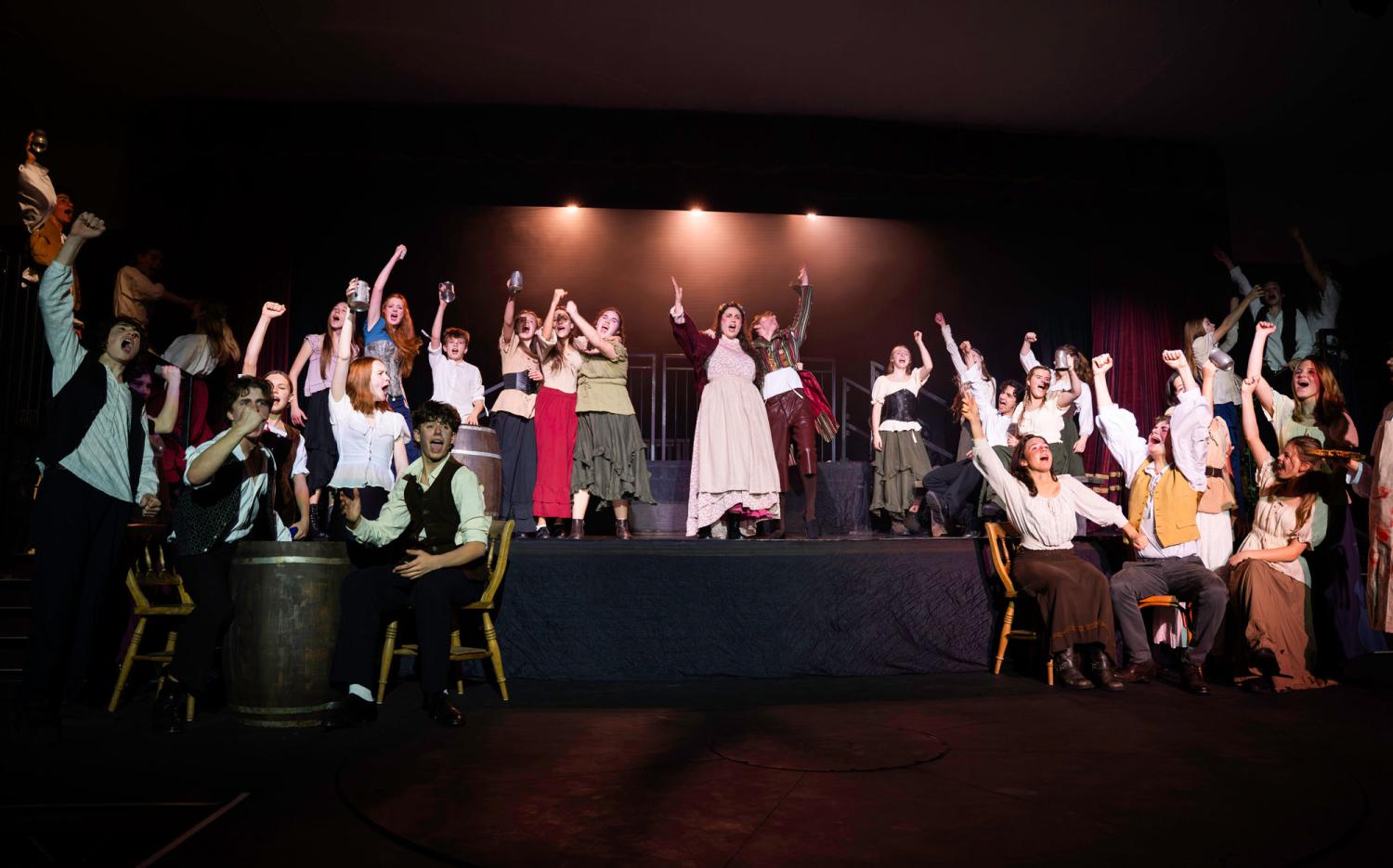
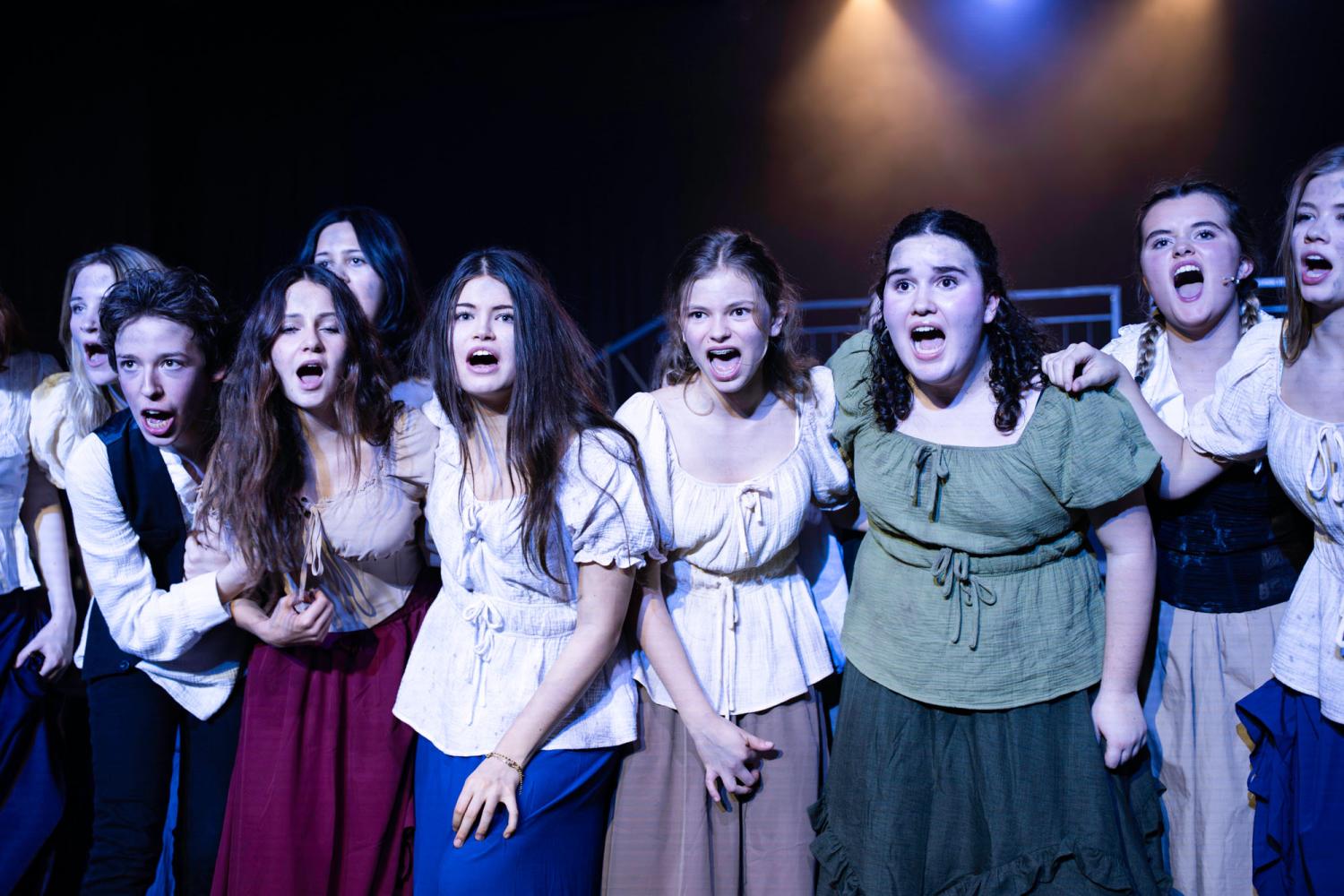
The story leapt forward several years to a reformed Valjean, now a businessman and Mayor. ‘Who Am I’ followed, showcasing Woody’s vocal range (I enjoyed the powerful interpretation of this piece from the platform left of stage). Two classic songs - ‘At the End of the Day’ and ‘Lovely Ladies’ - followed and if there was any question if the ensemble were strong enough to handle these showstoppers then the answer was an emphatic Yes! It would be a shame, however, only to focus on the music. These scenes were filled with great acting and choreography: well-timed glances, raised eyebrows, nuance, and clever emphasis. The bustle and the casual cruelty was juxtaposed with the plight of Freya’s Fantine. In a moment of pathos, she fights to make her case amongst the gossip and slander. This pain was made palpable in ‘I Dreamed a Dream’ and ‘Fantine’s Death’ again demonstrating how directors and cast had knitted together moments into a cohesive whole.
Watch our short film showing Les Misérables in rehearsal
I imagine I was not alone in feeling curious about how the next section would evolve. How would the Thénardiers be played? How would Valjean retrieve the young Cosette? Young Cosette may have been tiny but her voice resounded through the theatre as she sang ‘Castle on a Cloud’ (Georgia) (11s). No one was prepared for what would come next with the arrival of Madame Thénardier (played by Amaya). Freddie (U6) was overheard at the interval asking ‘did they hire her from the West End?’ Fair question. Every facial expression, every movement, every note was perfect. I enjoyed the note from director of music Kay Le Doujet saying that the Thenardiers ‘inhabit a sharply different, rhythmically driven world’ and this key change and step change was always going to be a highlight. Thenardier (Alfie) played the dastardly, hypocritical, sycophantic inn keeper, embracing every terrible aspect of his character!
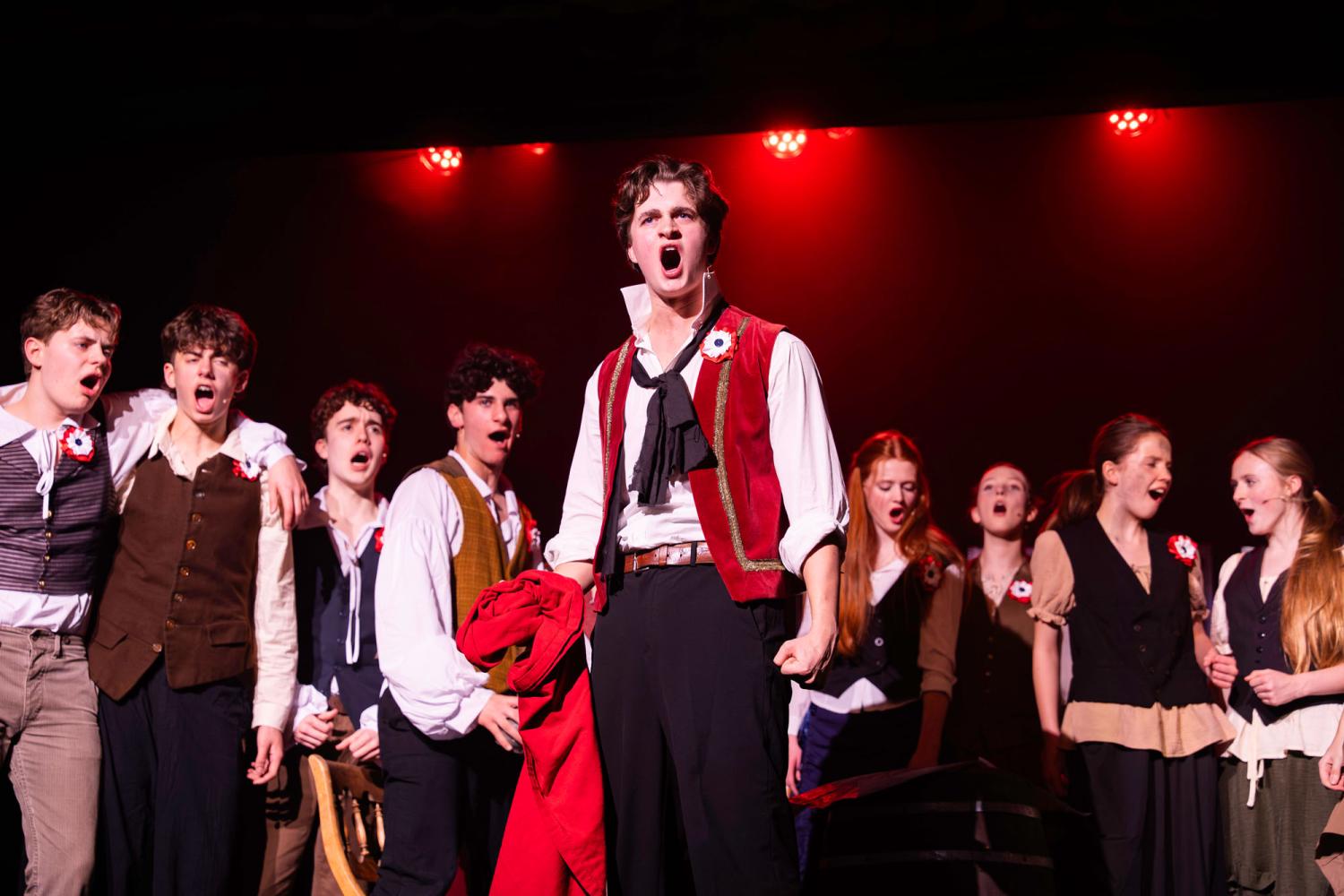
Another time leap. Cosette had grown up and Valjean was a little grey. What of Javert? Still hunting restlessly? ‘Stars’ presents Javert’s view of himself vs Valjean in binary terms; Jamie tackled this with a believable sense of arrogance, placing emphasis where we had not realised it was needed. I think this is what he did so well in the character of Javert; he seemed to know exactly when to pause or lift his voice or smirk.
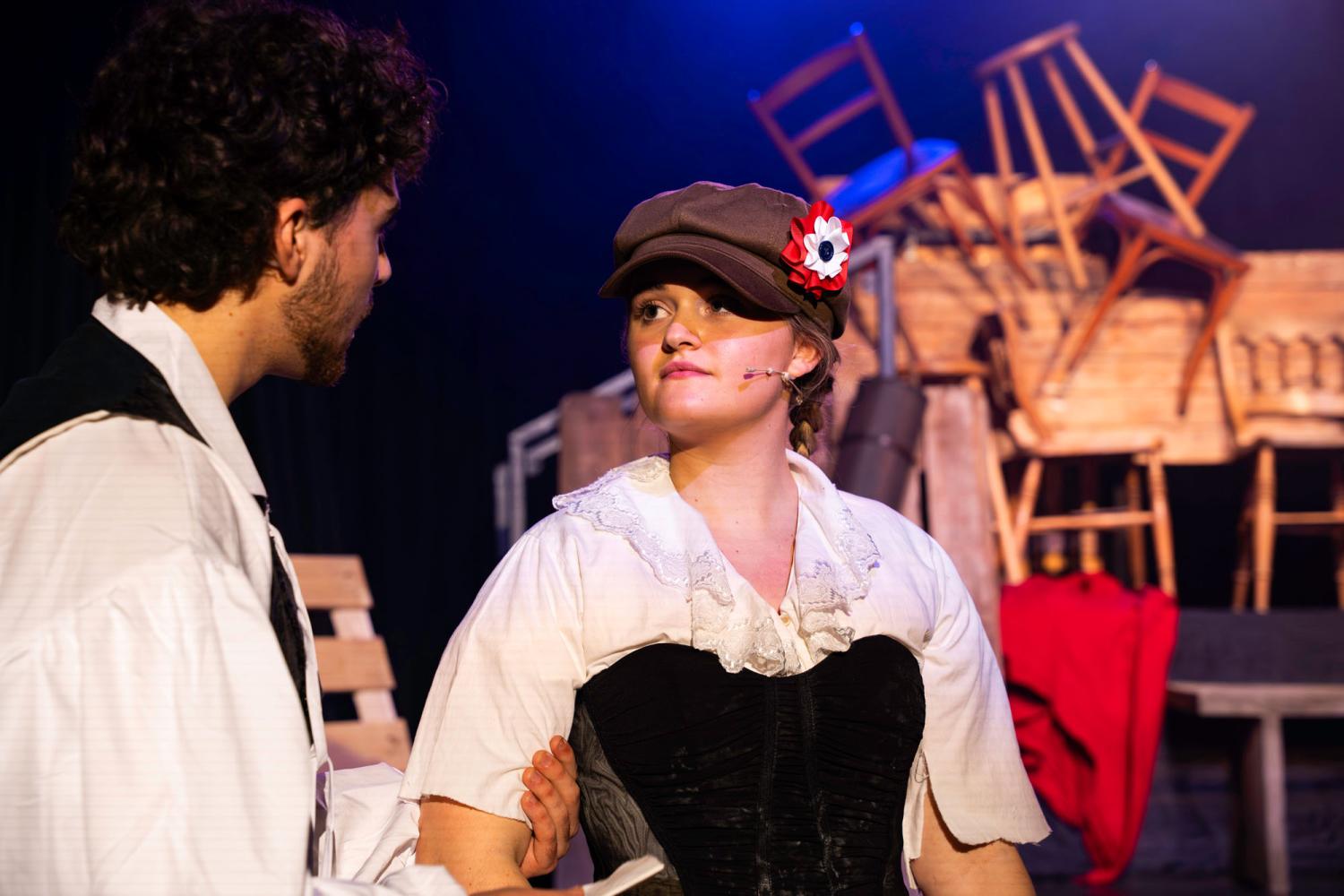
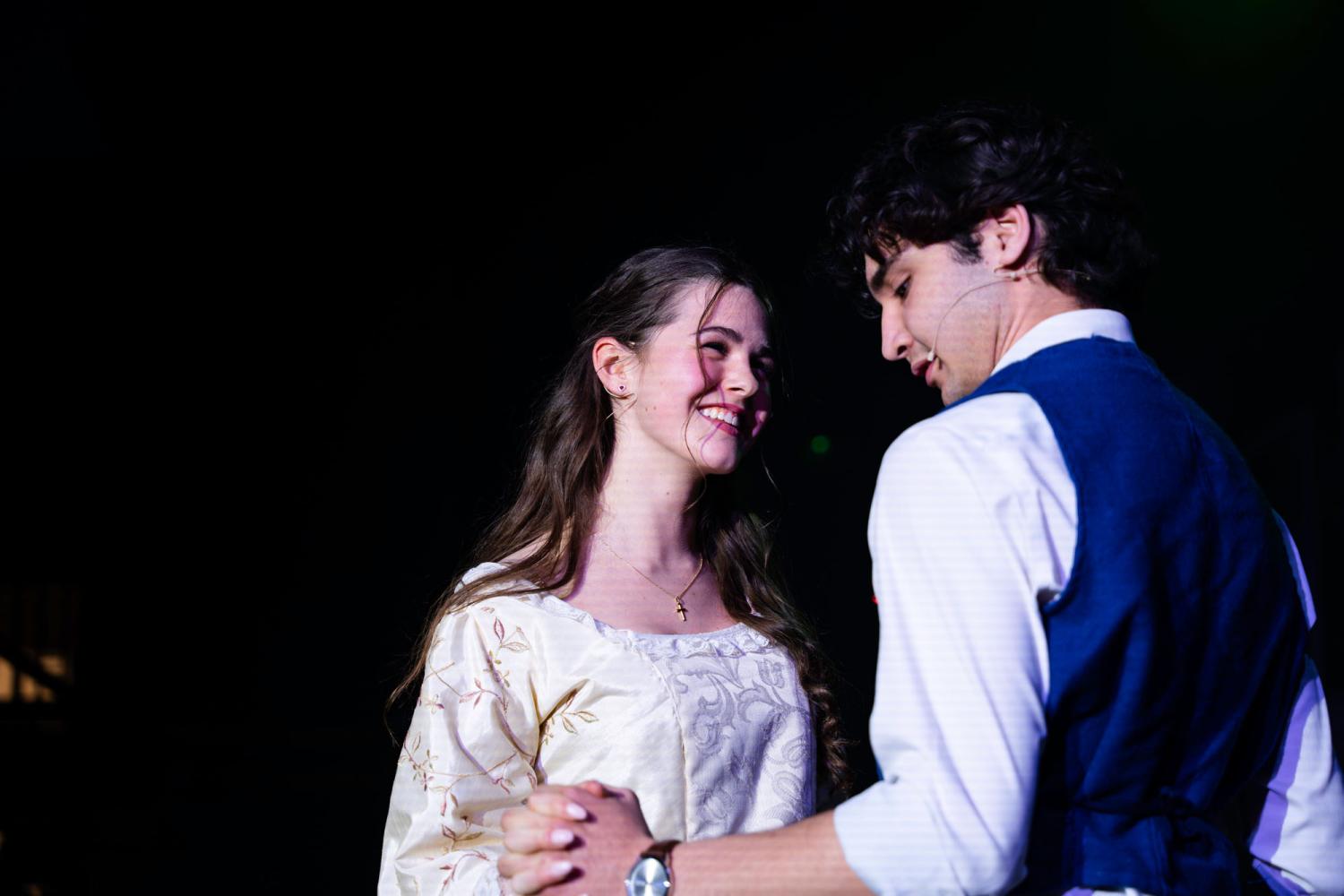
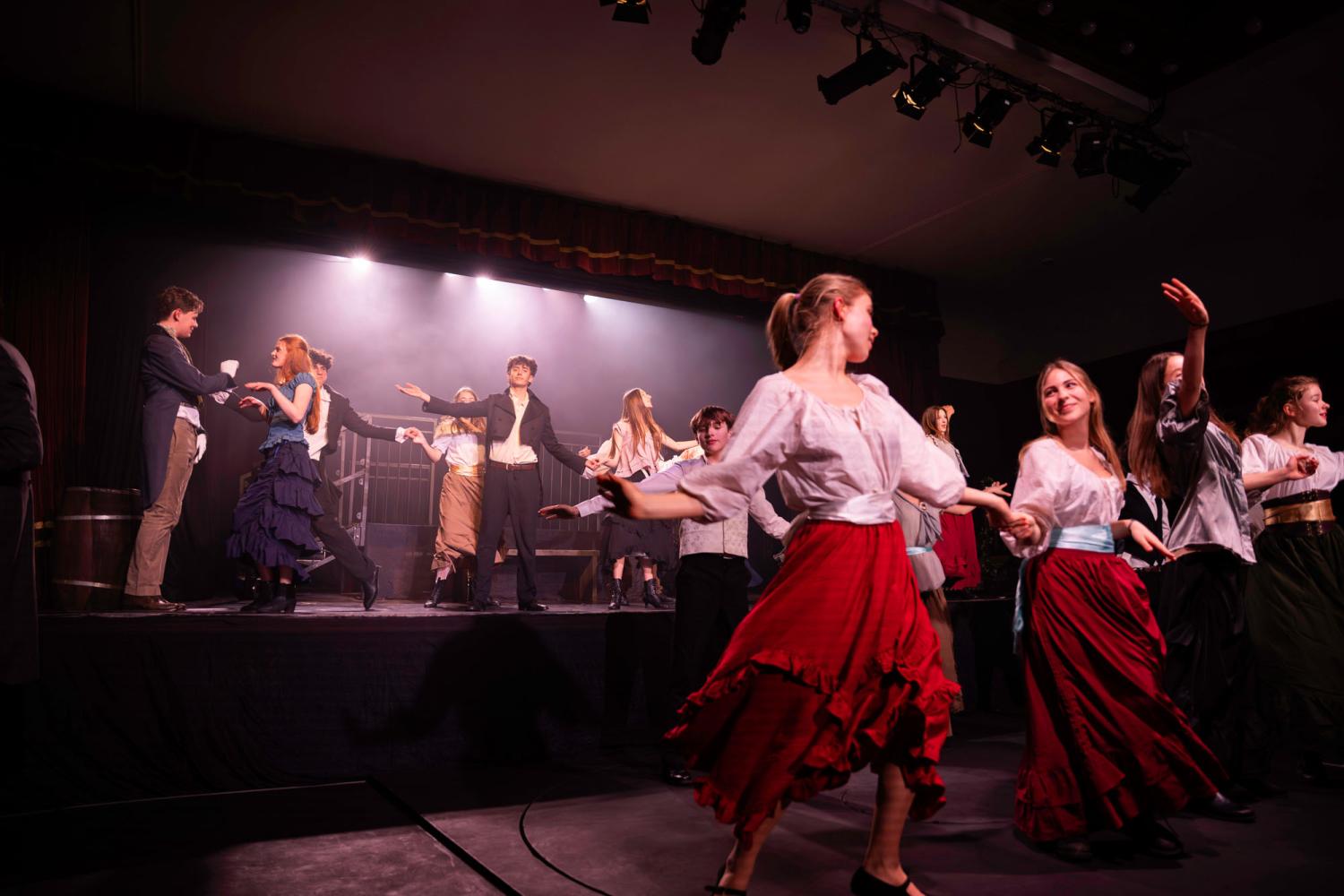
The run-in to the interval was then dominated by Enjolras (Orson) and budding revolution, alongside Marius (Thomas) and his budding romance with Cosette (Lucy). Spare a thought for Eponine (Olivia). Orson’s presence and magnetism came to the fore, moving from ‘Red and Black’ into ‘Do You Hear the People Sing’ exuding youthful idealism and righteous anger. This was another shining section for the ensemble and a chance to see the famous revolving stage (homage to the original 1985 West End production). This must have been a challenging section of the musical because within these sequences there needed to be space for the tangled web of love interests presented in ‘In My Life’ and ‘A Heart Full of Love’. Again, I felt that there was such coherence between the two that you could feel the giddyness of Marius and Cosette alongside the heartache of Eponine and beside the loss of Valjean. Lucy’s Cosette convincingly expressed her frustration and her longing for answers (beautifully sung of course). Aside from the strength of the voices, the use of the full stage was pleasing. 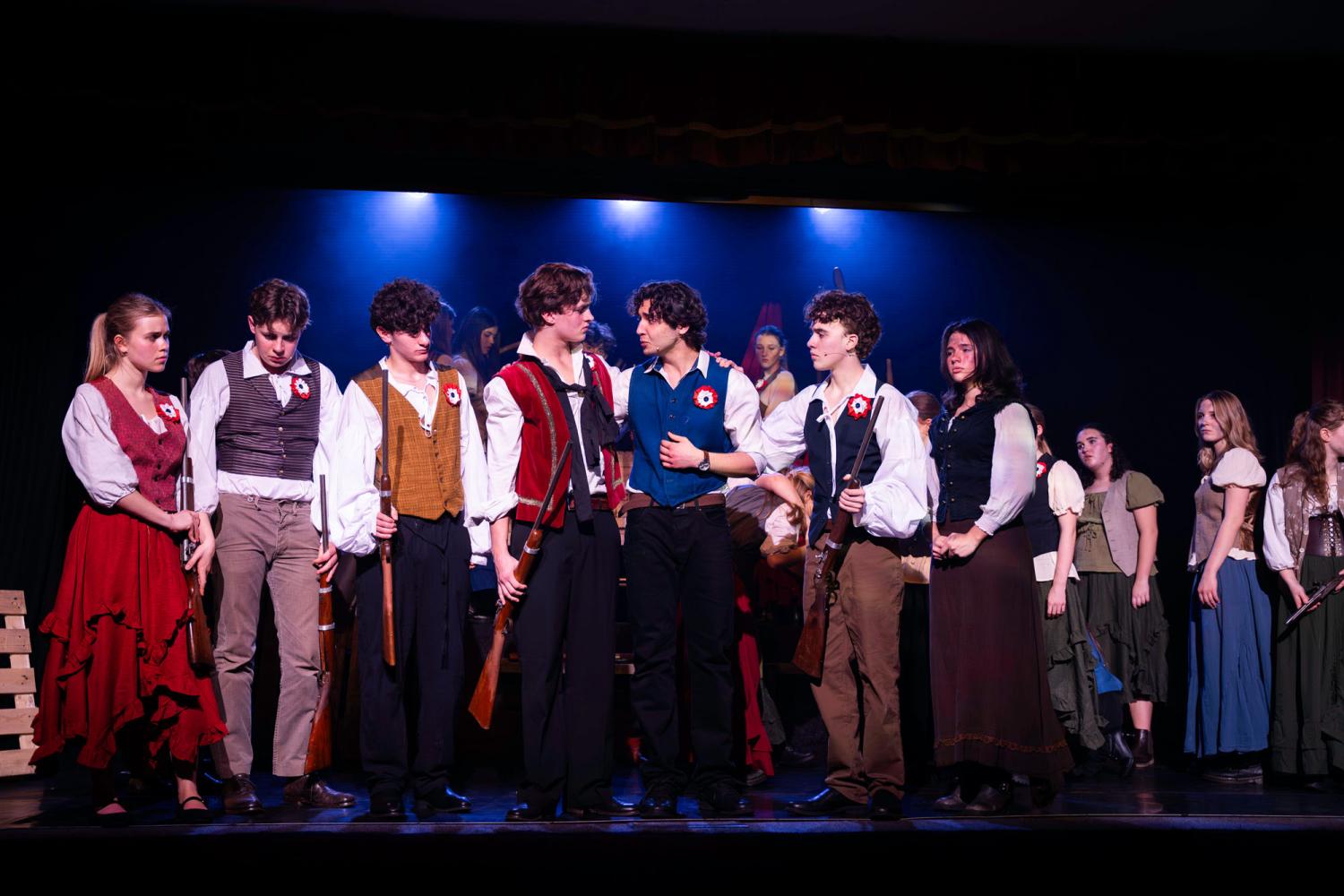
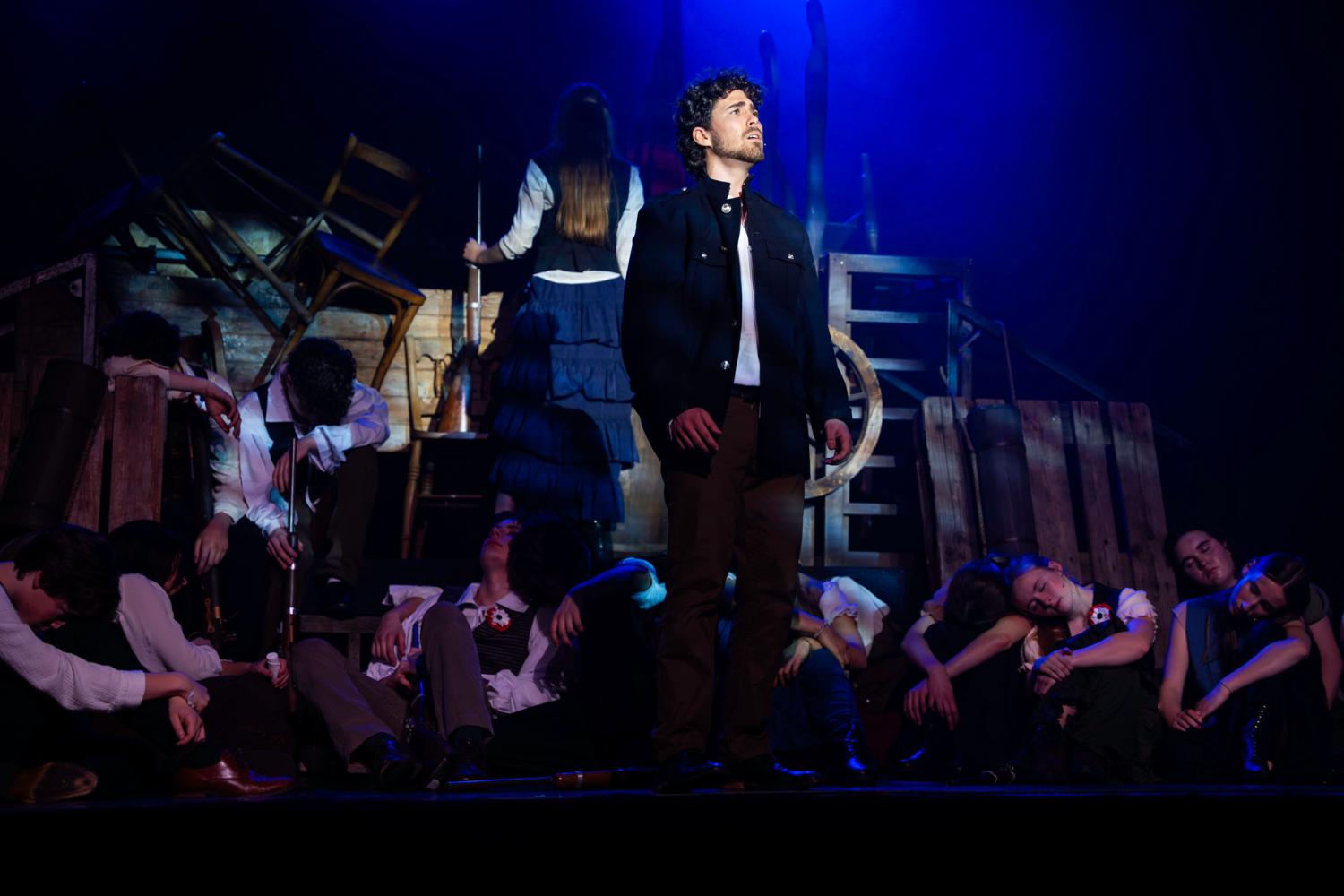
'One Day More’ was another highlight for the ensemble and a moment to celebrate the leads (protagonists and antagonists alike). It was tightly realised as a summary of Act One, with each character singing to the same tune but with varying and opposing motives; Javert versus students; Marius versus himself; Thénardiers versus the rest. Talk at the interval was animated, buoyed by recent scenes and the fast pace. How would the cast cope with the deaths, demise and sadness of the shorter second act? Olivia was able to show her talents as Eponine in ‘On My Own’ and ‘A Little Fall of Rain’. The audience felt the crushing reality of ‘the river [being] just a river’.
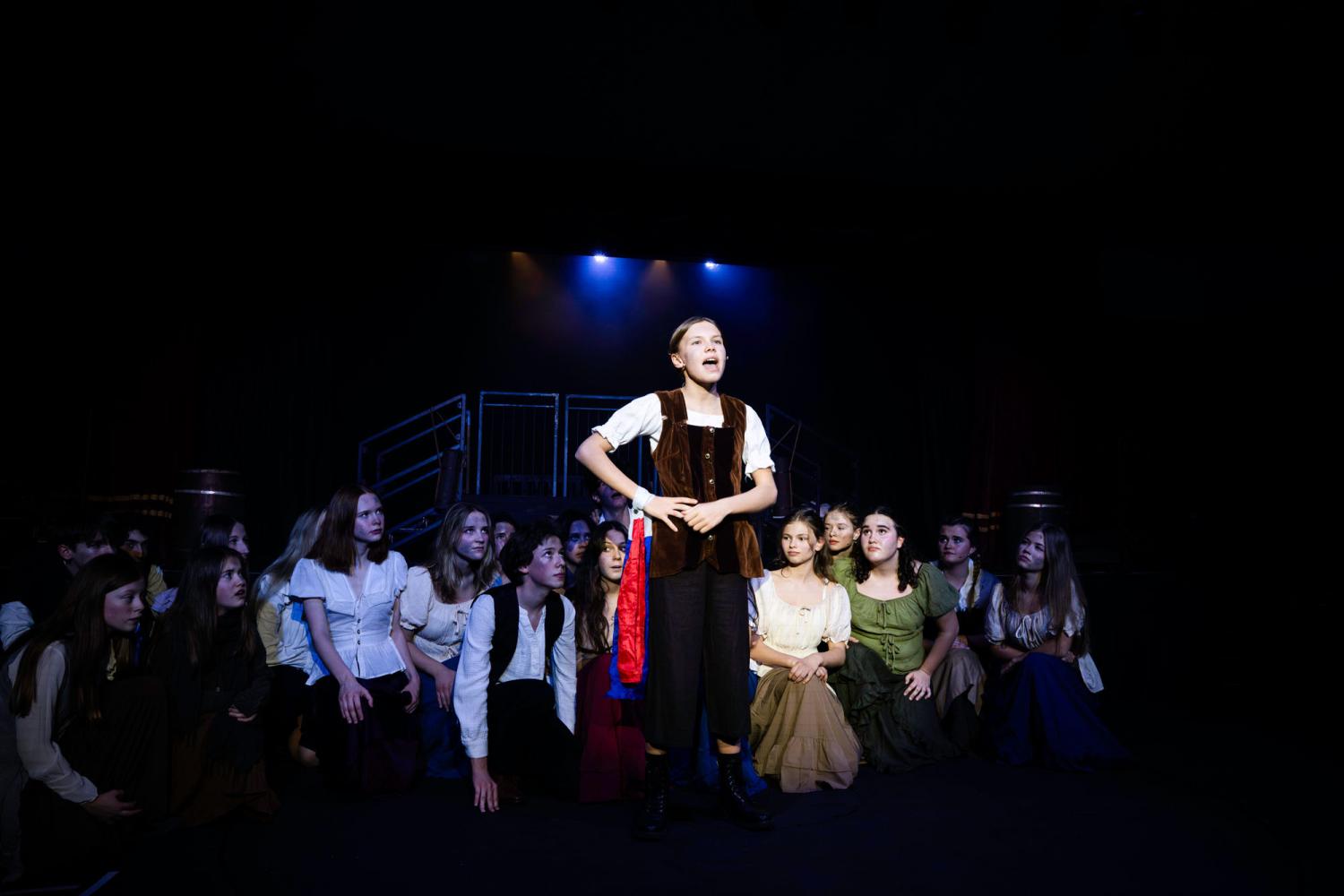
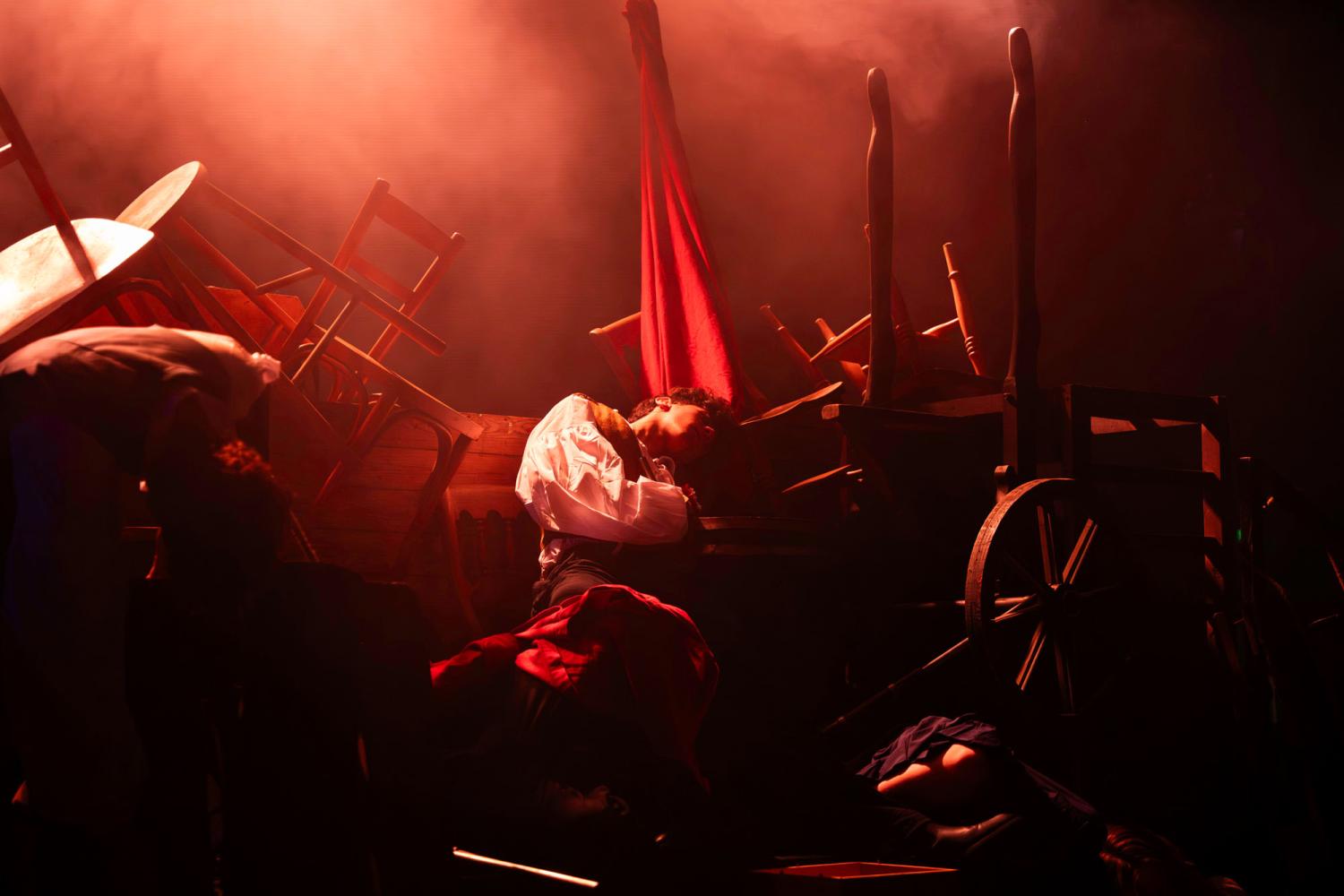 Gavroche, like young Cosette, was played by a pupil in the 11s (Anna). She deserves special mention for her confidence and presence, particularly in ‘Little People’. Gavroche’s demise, like Eponine’s, felt untimely and in vain. In my mind, we we were entering the final part of Les Misérables. With the end approaching, the sentiments of ‘Drink with Me’ must have resonated with the cast and crew. As much as we forgot that this was a school production - on account of its quality - it was all the better for the fact that it was a school production. It was no one’s job to be on stage, rather an exercise in camaraderie and seeing how far a project could be taken forward. Grantaire (Fin) then captured the fear of the moment; he expressed a fear of death and the greater fear that it could count for nothing: ‘could it be your death means nothing at all’. Seamlessly (once again) this gave way to the next sequence and Valjean singing ‘Bring Him Home’. Devilishly difficult and featuring Woody’s Valjean grappling with similar themes: mortality, meaning and, if necessary, sacrifice. In the scenes that followed, Jamie in his final frenetic and panicked moments as Javert, convinced us that he had lost his resolve, broken by Valjean’s gift of mercy. I had struggled to suspend disbelief around this part of the story when I watched the 2012 film. It now made more sense. Marius, too, crushed by recent events, seems to lose belief in his cause: ‘my friends my friends don’t ask me what your sacrifice was for.’ Thomas, who had been outstanding as Marius throughout, grasped his moment in ‘Empty Chairs at Empty Tables’ and expressed the shattering grief of his character.
It is well documented that the ending of Les Misérables brings a much-needed sense of hope amidst the tragedies. Many of the pupils I spoke to were deeply affected by the ending, by the voice of Lucy’s Cosette, alongside Woody as Valjean and Thomas as Marius. Classics teacher turned production bassist, Adam Lineker, spoke afterwards about the moment that moved him: Valjean never sells his silver candlestick but keeps it with him until his dying day; not only does he grasp his shot at redemption. He exceeds all expectations, both of himself and of the Priest who saved his life. This production surely exceeded the expectations of most of us, even those of us (myself included) who have the odd cynical remark to make about musical theatre. I am confident that the cast astonished themselves and should feel very satisfied with their achievements indeed. Mike Glen wrote in his introductory note that he ‘knew that, with time, we could do real justice to this extraordinary story once the right cast and creative team had evolved’. I hope that the result exceeded the high demands Mr Glen and Ms Le Doujet clearly make of themselves. I cycled home feeling lifted not just because of the hopeful story I had been told but because of the way it was so told: not by professional actors but by daring youngsters reaching such amazing creative heights through devoted practice between the demands of lessons, dining hall queues and exams.